Apollo Atomics keeps the pressurized water reactor design behind 80% of the world's nuclear plants and shrinks one part: a compact steam generator 20 times smaller at the same thermal power.[1]Y CombinatorApollo Atomics company profileYC[2]Deeptech DecodedAssil Halimi on the compact steam generator (22:21)Episode The reactor comes out roughly 40 times more compact, factory-built and running in under 24 months.[3]Launch YCApollo Atomics: The Modern Nuclear CompanyYC[4]GlitchwireApollo Atomics is building nuclear reactors an order of magnitude smallerPress, May 2026 Assil did his PhD in nuclear engineering at MIT, with 15 peer-reviewed publications and two patents on reactor design and fuel optimization.[5]MIT NSEAssil Halimi profileCompany[6]Nuclear Engineering and DesignHalimi & Shirvan (2021)Paper, 2021 He designed advanced reactors at EDF and operated one at Engie.[1]Y CombinatorApollo Atomics company profileYC Apollo Atomics (YC P26) announced a $31M seed in August 2026 led by FCVC. It says it has tested a working demonstrator and taken its fuel critical.[7]Apollo AtomicsCompany websiteCompany The line runs from the 10 MWe A-10 to the 300 MWe A-300.[7]Apollo AtomicsCompany websiteCompany[8]Deeptech DecodedAssil Halimi on the 10, 50 and 300 MW line (45:06)Episode
Decoded before it's obvious.
Assil Halimi is the co-founder and CEO of Apollo Atomics, which builds the most compact nuclear reactors. He holds a PhD in nuclear engineering from MIT, with 15 peer-reviewed publications and two patents on reactor design and fuel optimization, and previously designed advanced reactors at EDF and operated one at Engie.
The nuclear company he co-founded with Drew Walker and took through Y Combinator's Spring 2026 batch (YC P26). It builds pressurized water reactors compact enough to be factory-built, shipped on a truck and deployed in under 24 months.
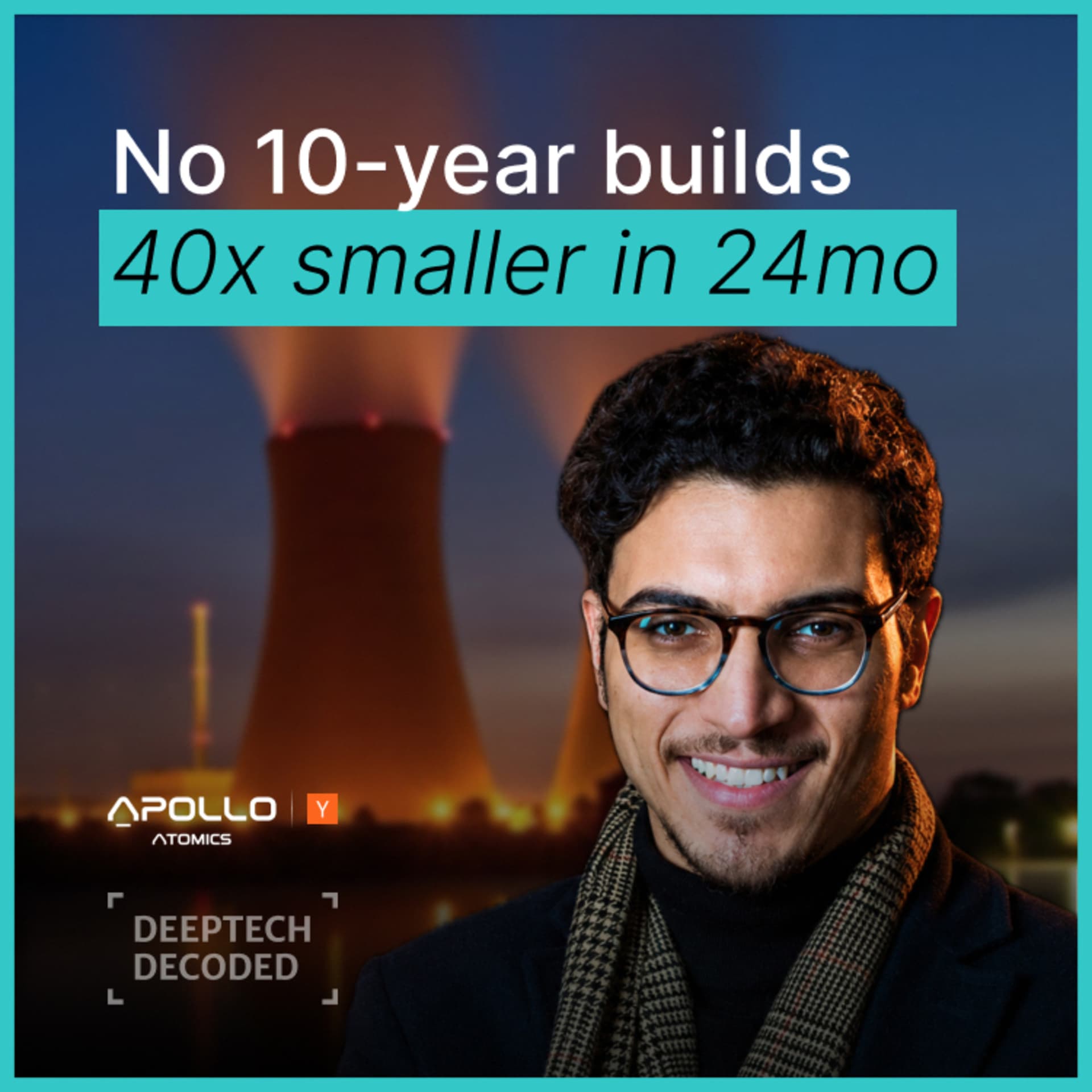
One component. Apollo keeps the pressurized water reactor design that powers 80% of the world's nuclear plants, with its commercial-grade fuel and existing supply chain, and replaces the hand-built steam generator with a compact one around 20 times smaller at the same thermal power. That makes the reactor roughly 40 times more compact, which is what moves construction from a site to a factory.
Apollo's three reactor sizes: 10 MWe, 50 MWe and 300 MWe. The company plans a 1 MW demonstrator in 2027 and targets electricity at 3 cents per kilowatt-hour.
The company announced a $31M seed round in August 2026, led by FCVC with participation from Y Combinator, Telesoft Partners, Alumni Ventures, Robinhood Ventures, Nucleation Capital, Pelion VC and Duke Capital Partners.
High burnup fuel, which extracts more energy from the same material, and small modular reactor design. He worked under Professor Koroush Shirvan in MIT's Department of Nuclear Science and Engineering.
Last updated Oct 22, 2026