Pitching your startup can be a breeze with insider insights — no more guesswork.
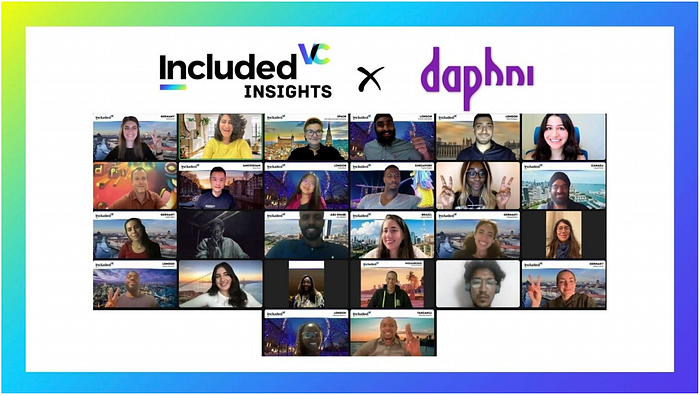
Included VC Mafia — 2023 Edition (Me upper left corner next to our Nikita)
Have you ever wondered what goes through the minds of top-tier venture capitalists as they evaluate startup pitch decks? The answer: a lot, and at lightning speed.
Class of 2023, we had the privilege of learning from one of the finest investors in the field: Pierre-Yves Meerschman, currently serving as a partner at Daphni.
Let’s explore Pym’s approach to evaluating pitch decks and enhance his insights by infusing real stories and my own interpretations. Here are the key takeaways that surpass the easily accessible insights you can find online. Every founder should engrain Pym’s evaluation mechanism in their thinking.
Certainly, here are the main highlights (beyond the obvious ones like the founder-market fit, team expertise, and background, strong storytelling, or market opportunity) that every founder should imprint on their minds.
In Pym’s own words:
We have both money and time for the founders. The question is, where can we make the most significant impact?
How are we convinced by the founders?
First impressions: where handshakes meet high fives.
1. Your Ultimate Goal: A Meaningful Introduction
Imagine your objective as a startup founder: securing a phone call with Pym to introduce your founding team and your visionary journey — not just your product. You aim to present early evidence and imbue him with the personal touch that ignites his conviction to champion your cause before the investment committee. Your success hinges on this interaction.
2. Know Your Constraints
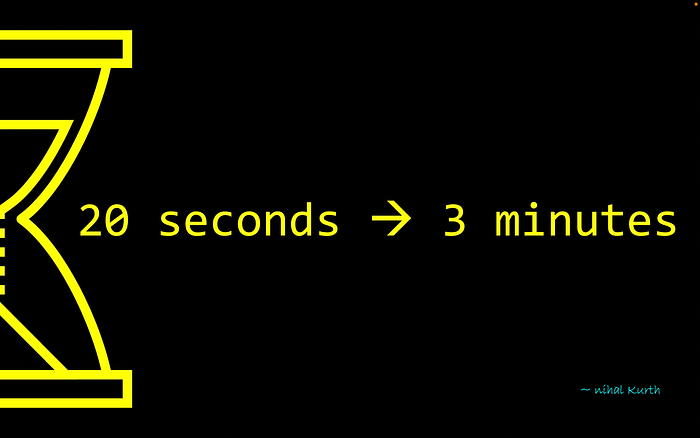
Within the brief timeframe of a minimum of 20 seconds and a maximum of 3 minutes, your pitch must shine. From what I’ve gathered from the session, Pym looks for reasons to invest, not reasons to hold back. Similar to other investors, he understands that the cost of missing a potential unicorn seed is greater than investing in the wrong startup.
Embrace minimalism in your slides, employing eloquent and straightforward language. Support your claims with evidence while weaving in visionary thinking.
3. Clarity, Universality, and the Grandmother Test
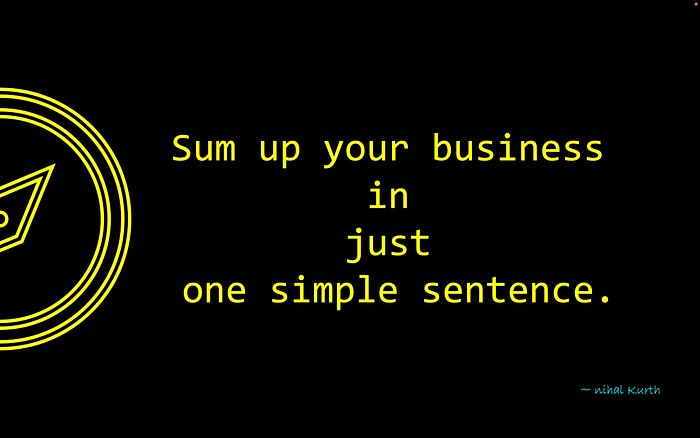
First impressions are shaped by your initial slides. Start with summarizing your business in a single, straightforward sentence.
Can you explain your venture to your grandmother? The heart of this lies in whether you can sell your concept to anyone.
That makes sense, right?
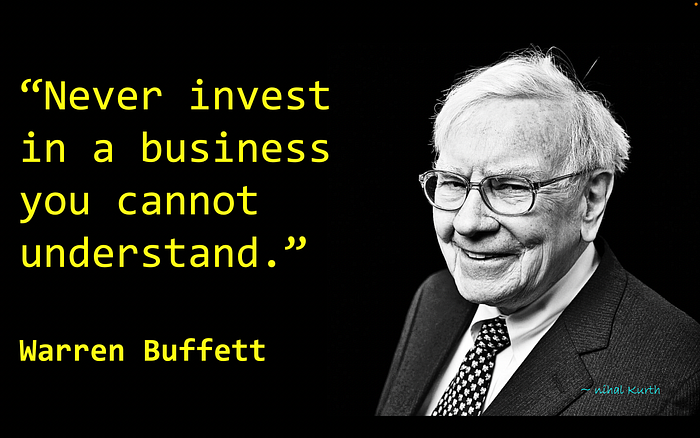
Pym’s philosophy mirrors Warren Buffett’s missed opportunities. Buffett admitted his oversight in bypassing Amazon and Alphabet due to a lack of understanding. Likewise, tech innovators, especially in intricate technology domains, need to explain their ideas with crystal-clear language, avoiding complex jargon. Your pitch deck mirrors your clarity, vision, and short-term strategy — one step leading to the next.
Investors, in the vast majority of cases, aren’t the pals you shared your molecular biology or quantum physics lectures with.
The mark you wanna leave.
4. Crafting a Vision Beyond the Product Through Execution
Ideas play a pivotal role, especially when presented on the pitch deck. But how do you go about convincing someone like Pym to believe in your vision? Could this be one of the defining achievements of your generation?
Get Nihal Kurth’s stories in your inbox
Join Medium for free to get updates from this writer.
Keep in mind that your product is the outcome of your broader vision. Pym encourages you to define your ultimate goals:
What do you want to accomplish in this world?
Contrary to popular belief, ideas don’t start out in their final form. They only become clear as you invest effort into refining them. So, what level of dedication have you put into executing your vision to create a practical solution? Demonstrating traction and reaching key milestones are paramount here. Metrics like user acquisition, customer engagement, partnerships, and milestones achieved since your startup’s inception speak volumes.
Are there people genuinely enthusiastic about what you’re doing because it addresses their needs? In other words, how well is your product retaining users? This concept often boils down to its stickiness.
“Make Something People Want.” ~Y-Combinator’s motto
Users have the final say.
Speaking of traction and milestones, their significance cannot be overstated. This involves metrics such as user acquisition, customer engagement, partnerships, and pivotal milestones achieved since your startup’s inception. Provide me with your user engagement statistics, and let’s be straightforward about it.
Are you making strides swiftly? When did your team come together and your first version undergo testing?
The key question: Do users keep returning? What’s the growth rate?
In the realm of B2B SaaS, interactions involve both buyers and users. How do you plan to navigate this complex dynamic?
Now, let’s say someone buys your product. The critical query: Are they still actively using it? And if not, let’s delve into why.
Let’s consider a scenario where there’s a significant drop in engagement within the first 30 days. What elements might be playing into this decline? And crucially, how did you manage to reverse the situation and make things better?
It’s worth noting that founders often lean towards sharing financial data rather than usage statistics and insights. Let’s make sure you don’t fall into that trap.
5. Would I be proud to work with these founders independent from the investment results?
I suppose no more elaboration is needed by now. However, let me share a story to help you picture it:
Webvan aimed to revolutionize grocery delivery in the early 2000s. Despite investing heavily in infrastructure, it faced logistics challenges and declared bankruptcy. Investors respected its pioneering spirit in e-commerce and its impact on modern delivery services.
6. Aha moments and the thrill of discovering something fresh!
Your pitch deck must educate. Pym emphasizes the pivotal role of “Aha moments.” These are the points where you make investors see the transformative potential of your endeavor.
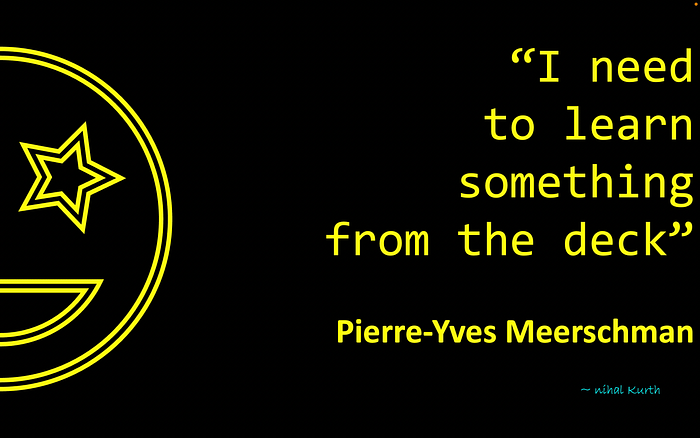
If he is not learning, there is nothing disruptive there.
Like Webvan’s pioneering attempt at revolutionizing grocery delivery, investors value impactful ideas that leave a mark, even if they face challenges.
In a world where investors seek transformative ideas and entrepreneurs who can execute them, Pym’s wisdom stands tall. Whether you’re presenting a deep-tech innovation or a breakthrough consumer product, remember that your pitch deck is a window into your vision, your journey, and your ability to take the world by storm.
A huge thanks to Pym for inspiring me to write this article and for being a part of Included VC for four years now. Beyond the key takeaways, what really stood out was how he hung around to see us mix and mingle — it’s clear he values the human side of things! The founders are incredibly lucky to have your backing.
Saving the best for last, a huge shout-out to my fantastic cohort and our pioneers, Anu and Niki, for turning this rollercoaster of learning into an unforgettable ride every single day!
Here’s to creating remarkable futures, with love from Germany.
From code to character: What a $500 Robot Gets Right About AI// A $500 robot just did what billion-dollar AI demos couldn’t. Reachy Mini shows us why: One head tilt. One blink. One giant leap for lova...
The viral chart nearly everyone read wrong.// 3–4 min read · A single chart convinced the internet that students run AI. One deeper look that rewrites the story.First appeared in Essentialist Edge · A...
From death zones to a YC-backed $21M orbital bet: decoding conviction in deep tech.Disclaimer: I’m not a space expert. I didn’t grow up building satellites or optimizing heat dissipation at zero gravi...