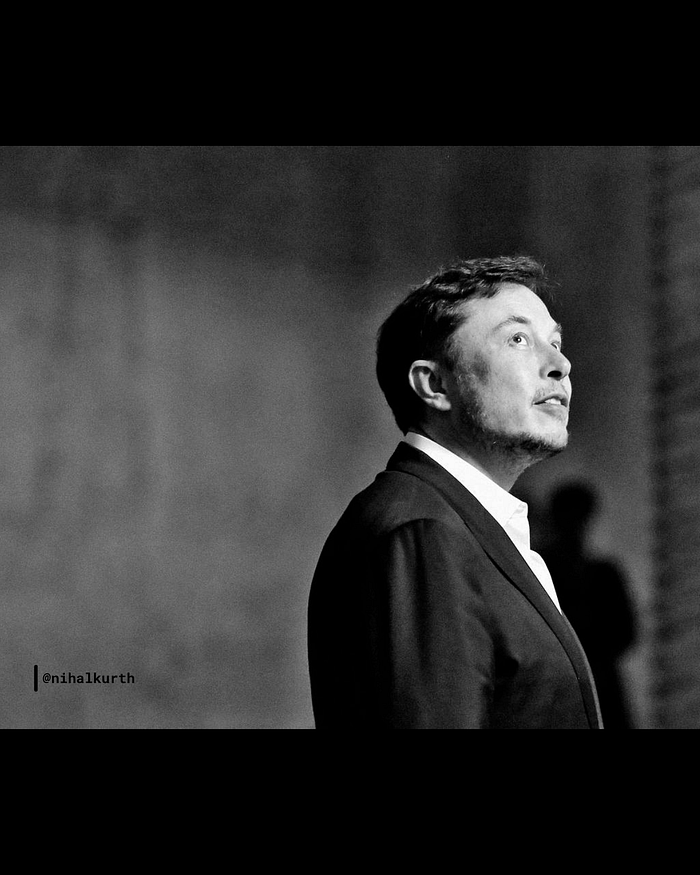
Do yourself a favor and get your hands on Walter Isaacson’s biography of Elon Musk. If you’re into understanding the minds shaping our world, you’ll be hooked.
In statistics, the mode represents the most frequently occurring value. It’s a fitting metaphor for Elon Musk’s core business principles. For Musk, these guiding philosophies are as fundamental as any statistical truth, distilled into five key tenets and eight supporting corollaries.
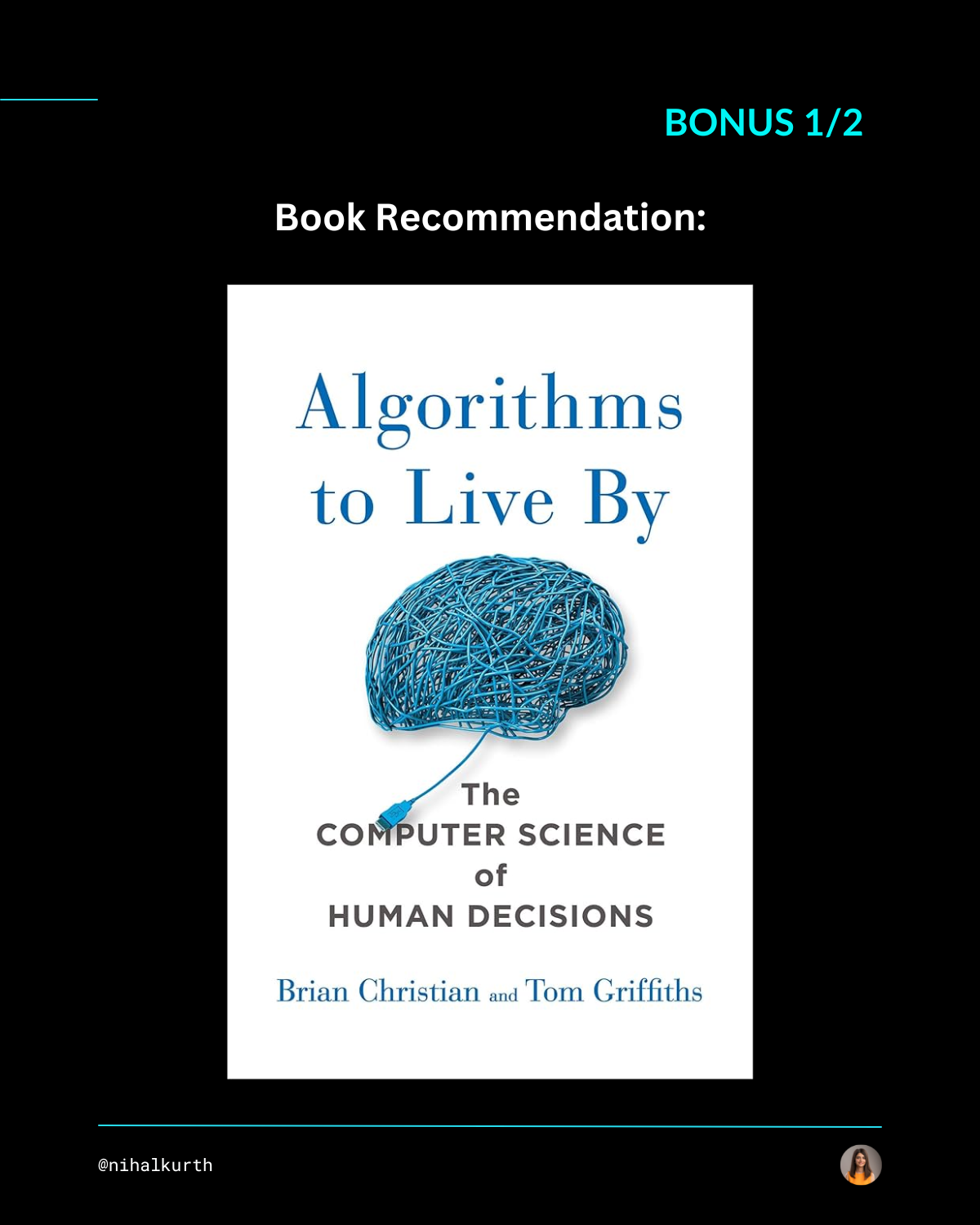
As humans, we often take ourselves too seriously, assuming that decision-making is an exclusively human challenge. Yet, like us, computers face limitations in space and time. That’s a reality computer scientists have been grappling with for decades. Algorithms, however, handle these challenges with remarkable efficiency. Whether we realize it or not, we, too, rely on systematic approaches to problem-solving in our daily lives. We just don’t always recognize them as such.
Here’s one algorithm that has much to teach us.
Learn to Execute
Before we dive in, keep this in mind: the true power lies in adapting these ideas to your own style.
Learning isn’t just about absorbing knowledge; it’s about making it work for you.
While there may be nothing entirely new under the sun, Musk’s fearless innovation and relentless drive to push boundaries have brought something genuinely fresh into the tech world since he first set foot in the Bay Area.
Musk’s algorithm is the product of a mind deeply influenced by military precision, resourcefulness and an unorthodox approach to problem-solving. It is driven by a deliberate intent and commitment to uncovering the facts.
The Algorithm is a distilled blend of hard-earned lessons from the intense production surges at Tesla’s Nevada and Fremont factories. As Musk himself says,
“I became a broken record on the algorithm, but I believe repeating it to an annoying degree is actually helpful.”
Whether you’re running a bakery or launching the next big startup, Musk’s logic is both adaptable and valuable.
Trust me, you won’t regret it. And who knows? You might even find your own way to take these principles further.
Let’s dive in!
Facts&Figures
Musk started his first business at 12, selling his software “Blastar” for $500. So far, Elon Musk cofounded
Zip2 in 1996
X.com in 1999 (merged with PayPal)
Tesla in 2003
SpaceX in 2002
OpenAI in 2015
Neuralink in 2016
The Boring Company in 2017
X Corp. in 2023 as the successor to Twitter
The Mode of Musk and the 5 Commandments of the Algorithm
#1. Question every requirement
Logic: Always challenge requirements, especially those from smart individuals. As they often go unchallenged.
Actions:
Identify the person, not the department or team, behind the requirement.
Then, simplify it.
#2. Delete any part or process you can
Logic: Eliminate unnecessary parts or processes. Reducing complexity upfront is essential.
Action: Remove as much as possible.
Hint: If you don’t eventually add back at least 10%, you haven’t cut enough.
#3. Simplify and optimize
Logic: A common mistake is to simplify and optimize a part or a process that should not exist.
Get Nihal Kurth’s stories in your inbox
Join Medium for free to get updates from this writer.
Action: Implement this after step two.
#4. Accelerate cycle time
Logic: Every process can be speeded up.
Action: Implement this step only after completing the first three: Question every requirement, eliminate unnecessary parts or processes, and simplify and optimize.
Hint: At Tesla, Musk acknowledged wasting time speeding up processes that should have been eliminated.
#5. Automate
Logic: Every process can be speeded up.
Action: Automation should come last.
Hint: Musk shares that the mistake in Nevada and Fremont was automating too early. They should have first questioned the requirements, deleted unnecessary steps, and resolved the bugs.
Behind the Scenes:
At Fremont, surrounded by 1,200 robots on each assembly line, Musk came face-to-face with the perils of over-automation.
The fix? Musk took matters into his own hands, walking the factory floor with a can of orange spray paint. As he moved through the maze of machines, he’d ask, “Go or stay?” If the answer was “Go” he marked it with an “X” and the workers knew it was time to remove it.
8 Key Corollaries
The algorithm was often paired with these additional corollaries:
#1. All technical managers must be hands-on
The tech world evolves at a staggering pace, and to stay relevant and effective, you need to walk the talk.
Are you a software manager?Spend at least 20% of your time coding.
Are you a solar roof manager? Participate in installations on the ground.
Without this, they are like a cavalry leader who can’t ride a horse or a general who can’t use a sword.
#2. Comradery is dangerous
Musk believes it can be difficult for people to challenge each other’s work because there’s a natural reluctance to throw a colleague under the bus. But he emphasizes that this mindset needs to be avoided.
#3. It’s OK to be wrong.
Just don’t be confident and wrong.
#4. Never ask your troops to do something you’re not willing to do.
#5. Do a skip-level
When problems arise, don’t just rely on meetings with your managers. Instead, do a skip-level meeting with the team members directly below them.
Why does this matter? Engaging with those on the front lines uncovers insights that are often missed by the typical management layers.
#6. When hiring, look for people with the right attitude.
Skills can be taught. Attitude changes require a brain transplant.
#7. A maniacal sense of urgency is the operating principle.
#8. The only rules are the ones dictated by the laws of physics.
Everything else is a recommendation.
Final Words:
Remember, the real magic happens when you apply these insights to your own unique context.
To all the founders out there, I wish you nothing but the best.
May your endless meetings and pitch decks magically turn into overnight successes and unicorns. 🦄 💫
Cheers!
Bonus:
Meet Nihal:
Hey there! I’m Nihal, an engineer turned product strategist with a strong background in B2B dynamics and a proud Included VC Fellow. With entrepreneurial roots and work experience across 14 countries, my focus is on helping founders build products and teams that matter. Curious about the mind behind the keyboard? Let’s connect — drop me a line!
Fun fact: I launched my first business at just 12 years old.
From code to character: What a $500 Robot Gets Right About AI// A $500 robot just did what billion-dollar AI demos couldn’t. Reachy Mini shows us why: One head tilt. One blink. One giant leap for lova...
The viral chart nearly everyone read wrong.// 3–4 min read · A single chart convinced the internet that students run AI. One deeper look that rewrites the story.First appeared in Essentialist Edge · A...
From death zones to a YC-backed $21M orbital bet: decoding conviction in deep tech.Disclaimer: I’m not a space expert. I didn’t grow up building satellites or optimizing heat dissipation at zero gravi...