Product Management is More Human Science Than Computer Science
Nihal Kurth·
Therefore, product managers are not backlog managers.
I have recently read Airtable’s Product Insights Report and found myself reflecting on it from complimentary angles. The report demonstrates the importance of reasoning skills and individual autonomy very effectively. The data-backed observations and corrective actions are spot on. Here is the link to the report if you wanna take a deep dive into the world of product managers.
700 product professionals across the United States participated in this survey to help the tech world understand where we stand in today’s modern product management world. As a matter of fact, I can’t even imagine the results of such a survey if it was to run in Europe. The studies suggest that the tech industry in the US is 20 years ahead of the game in comparison to Europe’s hence my concerns are valid.
Building products that people love is a science. Therefore it requires a scientist’s mindset and approach to the world. It gets fed from critical thinking, curiosity and experimenting heavily. With that in mind, below I recategorise the key areas the report touches on with my own interpretation.
1. Habits
Actually everything boils down to the habits of the individuals, rhythm of the teams. As James Clear says “The ultimate purpose of habits is to solve the problems of life with as little energy and effort as possible.” And your habits are the prime constraints of your productivity and efficiency.
2. Mindset
How do you do what you do? Mindset matters. A lot.
What are the heuristics you employ and develop through the challenges?
The best teams I have worked with are the ones who make reasoning their glue and key to every piece of work they touch. This not only helps them to understand the product in a system thinking but also paves the ways to break the rules for innovation.
3. Goal Setting
What is your long term product vision?
How do you set your goals and objectives?
Only 29% of teams always hit their goals. Only 42% of product teams understand the long-term product vision.
Worrying, right? Yet, I am very optimistic that it is on a path to recovery. However, the change needs to happen at a faster pace.
4. Motivation & Autonomy
What motivates teams like yours?
Help your team to understand the “why” behind the work. Why does this matter?
Get Nihal Kurth’s stories in your inbox
Join Medium for free to get updates from this writer.
The ability to be able to make your own decisions without being controlled or micro-managed should be the norm. The more independent the teams are the more engaged they are at their work. Period.
5. Data & Information
The case is two folds:
How does the information flow across your teams?
A mere 24% of teams say it’s very easy to find the information they need to do their work successfully.
2) What’s the clear, data-backed decision making approach you have in place? Facts, metrics, or data alone do not drive success.
6. Alignment
How well can you sync across the teams?
What is the universal glue that keeps the teams aligned? What’s holding them back?
Prioritise creating and socialising a single source of truth for broader, better alignment.
7. Impact
How does your product change people’s lives?
How do people and tech influence your impact on customers and the business?
How do the product teams then measure their success?
All that is to say…
Let the product managers play the game, be in the game.
Investing in operational foundations helps your team get the right context, and build the right structure. After that, it’s time to hand the reins to your team.
Building the right foundations lets your team move faster, and stay focused on building innovative products your customers love.
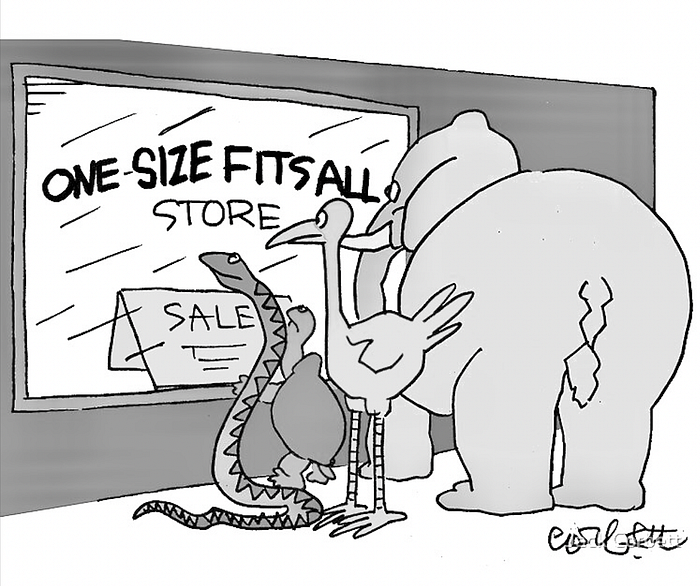
We need to design our systems, environments based on autonomy and constant experimenting. Then the product managers will come to learn how to optimise it based on all the factors that go into the teams’ nature and dynamics. In this way, we all can achieve what we desire and the business can thrive. — This is the end of a one-size-fits-all approach.
The kids who are set to play freely in a thoughtfully designed and creative playgrounds are more successful than their peers who are overly protected. If you design the playground in a way that it is under no condition perilous yet empowering with a healthy level of risk, you will allow them to do risky things carefully. And this is where the fun, learning and innovation starts. Needless to say, the same applies to the product teams.
If you also believe that good product managers are the mad scientists, please do reach out to me. I think I might be onto something. ,)
From code to character: What a $500 Robot Gets Right About AI// A $500 robot just did what billion-dollar AI demos couldn’t. Reachy Mini shows us why: One head tilt. One blink. One giant leap for lova...
The viral chart nearly everyone read wrong.// 3–4 min read · A single chart convinced the internet that students run AI. One deeper look that rewrites the story.First appeared in Essentialist Edge · A...
From death zones to a YC-backed $21M orbital bet: decoding conviction in deep tech.Disclaimer: I’m not a space expert. I didn’t grow up building satellites or optimizing heat dissipation at zero gravi...