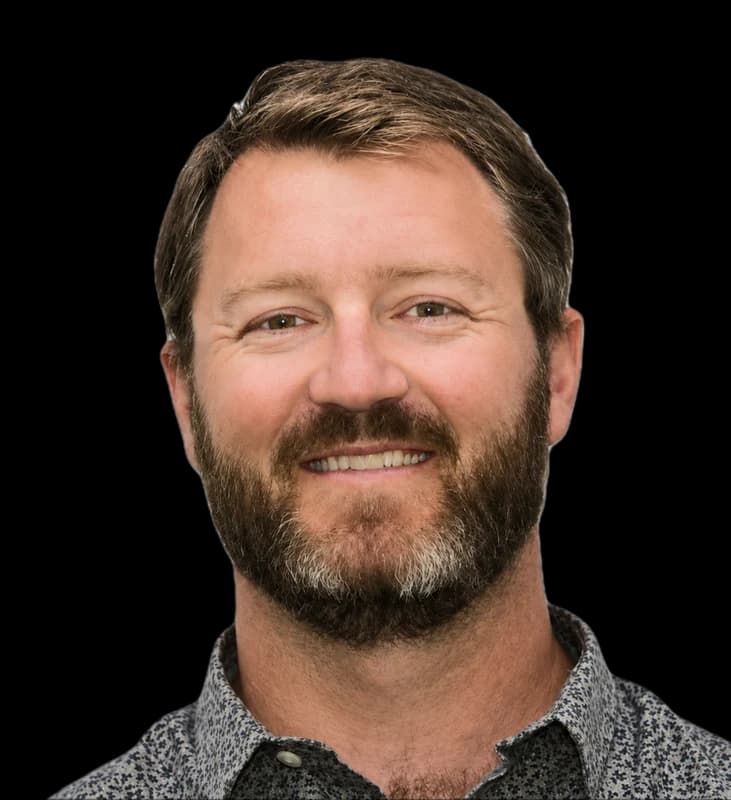

Co-founder & CTO
Beyond Reach Labs builds deployable solar arrays and thermal radiators that pack down to a dining table and grow to a football field in orbit. The patented structure changes geometry once deployed, giving a satellite 10 times more usable power for the same launch mass. Pele was the responsible engineer for Dragon's parachutes at SpaceX, leading engineering and production across more than 30 missions. Before that he was technical team lead for plasma-facing components at Commonwealth Fusion Systems. Beyond Reach Labs (YC W26) reported $175M in letters of intent in February 2026 and targeted a first in-space demonstration for late Q2 2027.
Pele Collins is the co-founder and CTO of Beyond Reach Labs, which builds deployable solar arrays for space. He led parachute engineering and production at SpaceX across more than 30 Dragon missions, and was technical team lead for plasma-facing components at Commonwealth Fusion Systems.
A Y Combinator W26 company building solar arrays and thermal radiators that unfold from the size of a dining table to a football field in orbit, for orbital data centers, commercial space stations and lunar outposts.
A rocket ride is volume-constrained, but solar arrays and radiators only get better as they get bigger. Existing deployable structures are expensive, take too much volume, and end up too flimsy to control the satellite once open.
A patented deployable structure that changes geometry in orbit, improving both stowage efficiency and stiffness. That is what delivers 10 times more usable power per launch and points towards kilometer-scale systems from a single rocket.
The company reported $175M in letters of intent in its February 2026 YC launch and targeted its first in-space demonstration for late Q2 2027.