Ditching the Dice: From Venture to Sure-Thing Capital
Nihal Kurth·
Because Who Needs Adventure When You Have Assurance?
A few weeks ago, I found myself deep in conversation about the challenges of investing in hardware startups. As I assisted a founder in seeking the right supporters for their venture, one thing became glaringly clear: interest was astonishingly low. In an industry where term sheets used to overflow, the enthusiasm for hardware was notably absent.
Naturally, this got us thinking. Investors face many factors when evaluating a startup, but certain words can make things tricky. Say “hardware” or mention your “cash flow issues” and suddenly, the enthusiasm wanes.
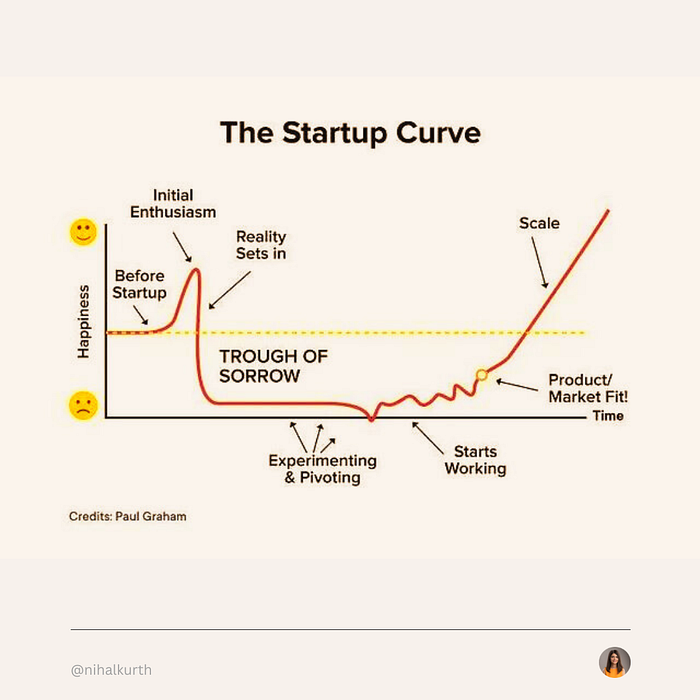
What defines “early-stage success criteria” — the sheer number of months or years they’ve been operating and their ARR, or the milestones they’ve achieved and the growth of the founders? While these are different approaches, they both converge on one key question: Can you eventually 10X my money? If you don’t accept that the ultimate goal for a venture capital firm is returning profits to their limited partners, then perhaps you should consider another setup.
Because VC funding means rapid, off-the-charts growth.
On the flip side, the reverse holds true as well. Let’s say you’ve got a top-notch B2B software, you’ve attracted some big-name companies as your early adopters, and you’ve even got some well-respected investors on board. Despite these impressive elements, there’s still no promise of a smooth exit (in any form it might come). Remember, that path is never a straight line.
There’s a noticeable trend towards safer bets and predictable results. Have we moved away from the ‘high risk, high reward’ mentality that once defined venture capital?
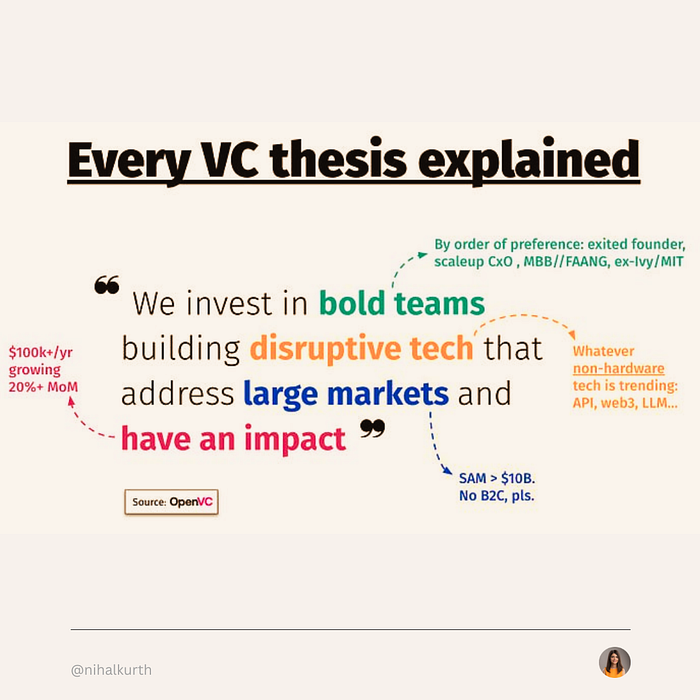
That’s why I was so amused to see a post on LinkedIn yesterday. Open VC’s Stephane Nasser shared an image with the caption: “Every VC thesis explained. You know this is true.”
Show me one game-changing founder who was an expert in what they were doing. Was Steve Jobs a computer whiz? He wasn’t even a techie. Did Elon Musk have a Ph.D. in electric vehicles or rocket science? Not when he started, though he hit the books later! And Jeff Bezos, was he an e-commerce guru? Hardly.
But they all saw exponential growth in their fields, had a burning desire, and didn’t want to leave their visions in anyone else’s hands. That’s what makes venture capital so thrilling. You’re helping visionaries build the future you dream about (your investment thesis spells it out for you). While founders knock on your door, asking for help — whether it’s capital or other support — you need to remember: Am I giving equal opportunities to everyone? Am I consciously and intentionally building a bias-free decision-making system?
Let’s face it: There are systemic barriers to resources and connections that could change an underrepresented founder’s trajectory. Outliers come in surprising packages, and it’s actually the investor’s job to spot that talent.
One simple step that can be taken is to give the same weight to “warm introductions” and direct reach-outs, ensuring everyone has a chance to be seen.
Or, we can take another opportunity by committing to connect underrepresented founders with investors, customers, and resources in meaningful and structured ways. Better yet, let’s make them decision-makers, just like Included VC does.
In an age where all you need to start a company are a credit card and a laptop, leaving diversity out doesn’t just slow our progress — it stifles the creativity that drives innovation. Embracing diverse perspectives is not just a moral imperative; it’s the key to unlocking the full potential of the future we aim to build. Data backs that up, too.
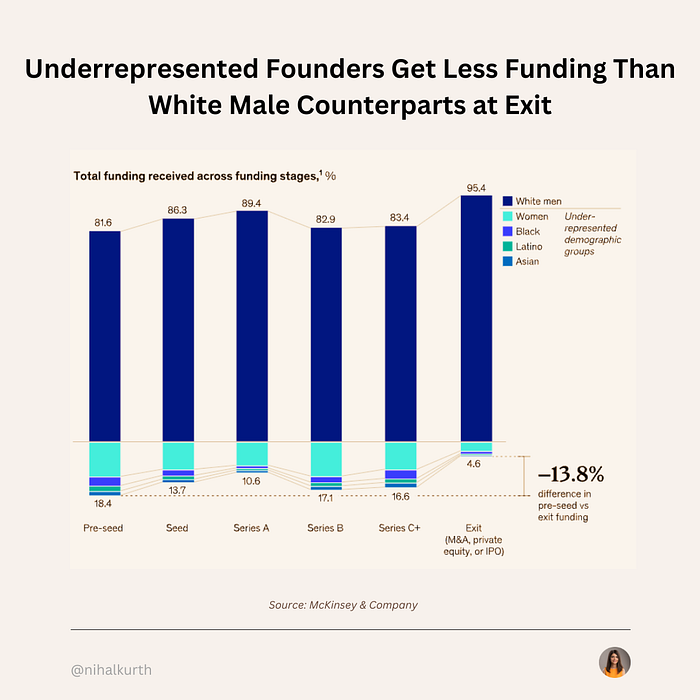
According to a McKinsey report, diverse founders don’t just boost the economy — they also give investors a 30 percent higher return when they exit, compared to their White male counterparts.
It makes our ecosystem more relevant and resilient.
Understanding “Have an Impact”:
We all know that impact is created by people, specifically the founders in this context. Why, then, is there so much focus on revenue?
Consider Coca-Cola: Did you know they sold only 25 bottles in their first year?
And then there’s Amazon: It took nine years of slow growth, leaving stockholders on the edge of their seats.
Take Tesla, for example. It took the company 17 years to become profitable, a journey starkly different from Ford’s, which achieved profitability in just a few months. Back in 2008, Elon Musk poured the last of his remaining cash into Tesla, at a time when he didn’t even own a house or have anything else of value to sell.
Now, look at Apple today: With a market cap of 3.22 trillion, it’s thrilling for investors. But behind the scenes, in the early days, co-founders Steve Jobs, Steve Wozniak, and Ronald Wayne struggled to get a bank loan because personal computers were an unheard-of concept.
This is what we call faith.
Why are we so quick to judge a startup’s potential by its early revenue? Shouldn’t we focus more on the visionary founders who dare to redefine the industries not just in PowerPoints, but in reality?
Get Nihal Kurth’s stories in your inbox
Join Medium for free to get updates from this writer.
After all, the next game-changer might just be the one we overlooked.
From Overlooked to Overachievers
Betting on visionaries, not just numbers, is the essence of venture capital, if you ask me. But it’s not just about the individual. Those visionaries come with a circle of backers and friends ready to catch them, no matter how fast they fall off the cliff. As Matt Clifford beautifully puts it:
“Silicon Valley is gripped by the cult of the individual. But those individuals represent the triumph of the network.”
Matt Clifford
While history shows that certain profiles went on to become “unicorns” and beyond, this has led to a biased evaluation process that often works against women and minorities. Once again, venture capital gives us the power to find those hidden gems and help them rise to the heights they can easily reach with a little boost from “value-adding” VCs — because nothing says “value” like hype and high hopes.
When Faith Outweighs Cash Flow
From an investor’s perspective, it makes sense to be finance-driven — they need to deliver returns to their limited partners. But there’s a lesson to be learned from the legendary VC figures in the Bay Area: it’s about mindset over meticulous financial planning, about creating new markets and making the pie bigger rather than fighting for a slice of the existing one.
Remember, in the early days of any startup, the only fuel is “faith.” Founders thrive on faith, not cash flows. Steve Jobs didn’t have spreadsheets predicting Apple’s future. He had a vision.
Elon Musk didn’t start with Tesla’s profit margins; he started with a deep-seated curiosity that went all the way back to his college days. The reason he wanted to pursue a PhD in applied physics and material science was to develop advanced energy storage technologies for electric vehicles. He wasn’t just about the numbers; he was about the mission. And through it all, he surrounded himself with the best minds in the field, while keeping his faith rock-solid.
For founders, it’s noble to build a company and tackle problems in innovative ways. But in the end, we need the foresight to pay the bills and reassure everyone:
“One day, I will pay beyond the bills. And on that day, you’ll be very pleased to be my investor.”
Three Key Factors Influencing Investor Bias
A McKinsey report highlights three big reasons why investors are biased against underrepresented founders:
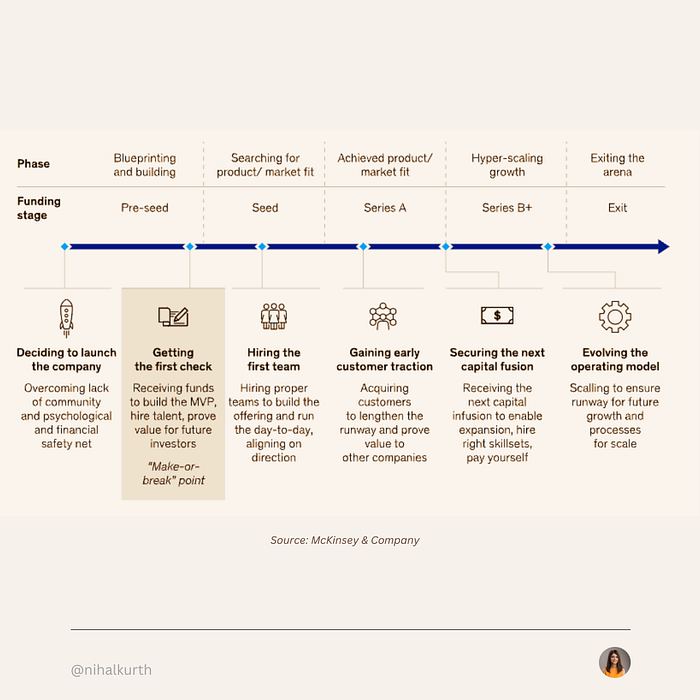
A founder’s journey: Six significant inflection points
1. Affinity Advantage:
Investors are more likely to invest in founders who look and sound like them. This “similarity effect” often makes these founders seem more knowledgeable.
2. Gender and Ethnic Match:
Gender and ethnicity play a big role. For example, 16 percent of women founders said their investors were mostly women, compared to just 1 percent of men.
VC investors love high-risk, high-reward bets, but they often play it safe by sticking to familiar patterns from the past. They rely on historical data to gauge which startups might be less risky. This approach creates a tough barrier for underrepresented founders, whose innovative ideas and business models naturally defy predictable molds. After all, true innovation breaks from established patterns, doesn’t it?
An immigrant founder shared how investors struggled to see the potential of her market:
“I realized that Hispanics were always an afterthought. … Innovation and technology weren’t happening in the Hispanic marketplace because nobody was paying attention.”
3. The White Male Co-Founder Effect:
An investor noted that diverse founders are often advised to include straight, White men in leadership to improve funding chances, a bias particularly common in later rounds.
A Final Thought for VCs and Founders
Venture capital is a pretty unique business. It’s heavily people-focused, which means there are bound to be biases and a strong reliance on relationships. This makes me think of something Andy Grove once said to John Doerr:
“John, venture capital, that’s not a real job. It’s like being a real estate agent.” — Andy Grove
Grove’s comparison suggests that VC is more about making deals than actually creating or innovating. It implies that VCs often rely on networking and market trends instead of getting hands-on with building new products. Do I agree? Absolutely. It definitely gives us something important to think about.
But let’s put this in context. Yes, it’s ultimately the founder’s job to build and grow the business exponentially. No one can do that for you. Even if Sam Altman wrote a step-by-step guide for your startup, you wouldn’t succeed if you didn’t have the inherent capability.
However, we all know that good investors do more than just write checks. The only way to truly support a startup is to believe in its potential, get your hands dirty, and genuinely relate to the founders. At the very least, ensure you're not causing any harm.
To all the VCs and founders out there, I wish you nothing but the best.
May your endless meetings and pitch decks magically turn into overnight successes and unicorns. 💫
Cheers!
Meet Nihal:
Hey there! I’m Nihal, an engineer turned product strategist with a strong background in B2B dynamics and a proud Included VC Fellow. With entrepreneurial roots and work experience across 14 countries, my focus is on helping founders build products and teams that matter. Curious about the mind behind the keyboard? Let’s connect — drop me a line!
Fun fact: I launched my first business at just 12 years old.
From code to character: What a $500 Robot Gets Right About AI// A $500 robot just did what billion-dollar AI demos couldn’t. Reachy Mini shows us why: One head tilt. One blink. One giant leap for lova...
The viral chart nearly everyone read wrong.// 3–4 min read · A single chart convinced the internet that students run AI. One deeper look that rewrites the story.First appeared in Essentialist Edge · A...
From death zones to a YC-backed $21M orbital bet: decoding conviction in deep tech.Disclaimer: I’m not a space expert. I didn’t grow up building satellites or optimizing heat dissipation at zero gravi...