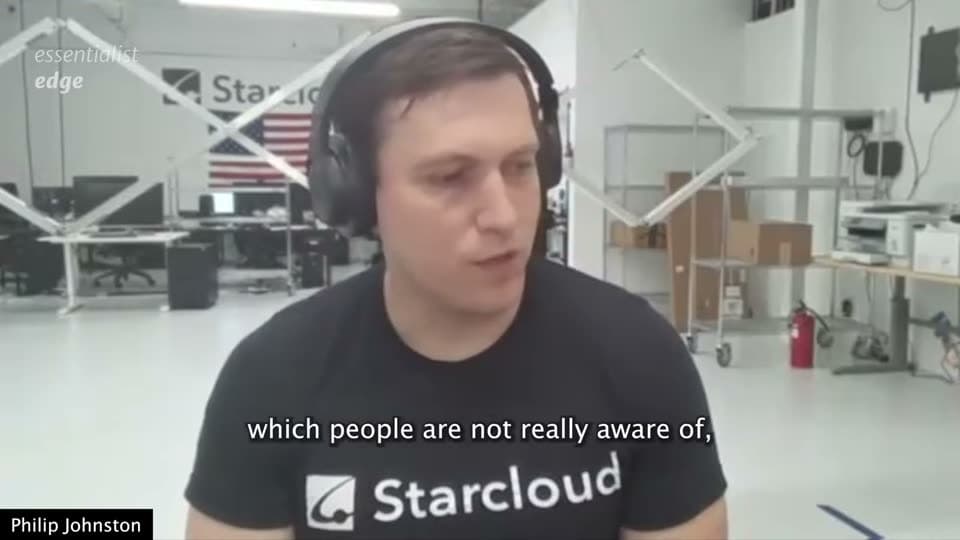
Starcloud, which launched as Lumen Orbit, builds data centers in space, first to give other satellites GPU compute, then to absorb the energy demand AI is creating on the ground.[1]Y CombinatorStarcloud company profileYC[2]TechCrunch200 VCs wanted to get into Lumen Orbit's $11M seed roundPress, Dec 11, 2024 Philip is a second-time founder who worked on satellite projects for national space agencies at McKinsey.[1]Y CombinatorStarcloud company profileYC[3]Launch YCStarcloud: Data Centers in SpaceYC Its first launch was planned for November 2025, carrying Nvidia H100s.[4]Deeptech DecodedPhilip Johnston on putting the first H100s in orbit (19:51)Episode
Decoded before it's obvious.
Philip Johnston is the co-founder and CEO of Starcloud, which builds data centers in space.[5]StarcloudCompany websiteCompany He is a second-time founder and previously worked at McKinsey on satellite projects for national space agencies.[1]Y CombinatorStarcloud company profileYC[3]Launch YCStarcloud: Data Centers in SpaceYC
A Y Combinator S24 company putting data centers in orbit, starting with GPU compute for other satellites and moving towards the energy demand created by AI.[1]Y CombinatorStarcloud company profileYC Its case rests on abundant solar energy, radiative cooling and no permitting queue.[1]Y CombinatorStarcloud company profileYC[3]Launch YCStarcloud: Data Centers in SpaceYC
Energy and cooling.[3]Launch YCStarcloud: Data Centers in SpaceYC Space offers abundant solar energy and radiative cooling, with room to grow without the land, grid and permitting limits that hold back terrestrial builds.[3]Launch YCStarcloud: Data Centers in SpaceYC[1]Y CombinatorStarcloud company profileYC
Last updated Oct 23, 2026