Inside Deep Tech Investing: A Masterclass From Both Sides of the Table | Graeme Harrison
The reasoning layer
Decoded before it's obvious.
Transcript
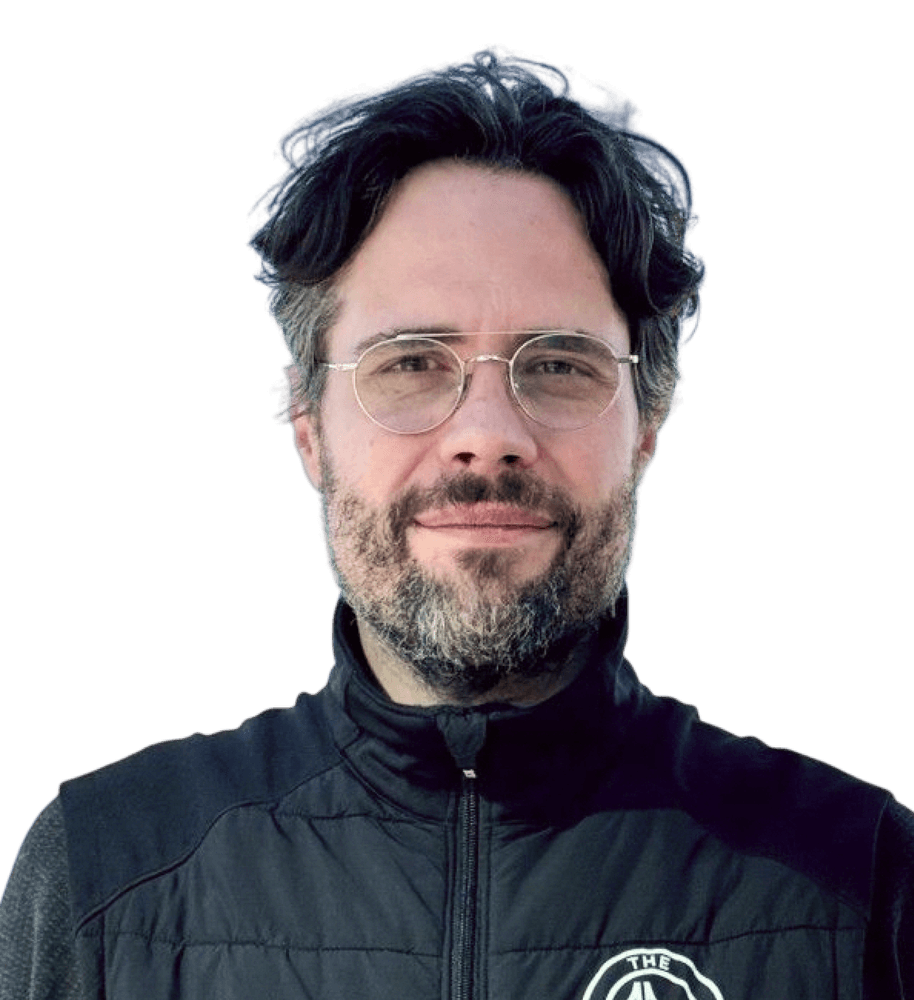
So Graham, actually before our conversation I've been trying to figure out you because you have a very, let's say, unconditional, you have a very atypical profile, like looking at especially your law background. So today I was thinking about having a conversation about first who you are, and how your mind works, know, what happened till today that made you the person you are. And afterwards we can dive into your double roles. And then also I would like to talk about the Beyond Reach Labs investment. It's an amazing opportunity for us to turn the table and look at from an investor perspective who was one of the early backers of the team. We had a conversation with Pelle. If that sounds good for you, we can... design the conversation in this way and no scripts however it goes then we follow the flow.
Hahaha And it is quite impressive to see because for many people they might not reach the jump. But to me, when I take a look at the law, my sister is a lawyer. And actually having a lawyer in your side is an amazing thing because they can figure things out in a very matching way and reason very strongly if they have an ethical brain at the same time. But when I take a look at the law firm, it's always based on precedence and always looking backwards. and where you are today is almost totally opposite. Like you go forward to the unknown and then trying to do something that doesn't exist yet. Like maybe you can help us understand what happened.
great question. So I'll take you back in time. Before I did any of that stuff, I was an entrepreneur. Like I came out of high school and I went to get into entrepreneurship. And I did a number of startup companies that were like really small scale. And one that I did when I was living in British Columbia actually was relatively successful. It was importing electronic cigarettes. And this was before... electronic cigarettes were a big deal. Yeah, you know, there's one factory in China that was then producing them. It's like vapes, they call them vapes now. And I, you know, made some money doing it and I kept reinvesting the capital and reinvesting the capital. And eventually there's law passed, like a regulatory law passed while I had a boat on the way. And I had all my capital tied up in it and that failed.
as a result, so I lost everything, total wipeout, as a result of the boat got there, they seized the stuff and that was the end of it. And so what happened was that complete wipeout made me realize a couple things. One, I gotta go rebuild capital, because at that point I didn't have any capital anymore. And two, I really didn't have a good grasp of the basics of how the system works. And to your point, I went, got.
Yeah, like the commercial, yeah, you got it, you got it. So I was very interested in understanding that commercial aspect of the business world and understanding how laws and contracts and all of this other stuff played into the ability to build a successful company.
Yeah, that's right. Yeah, you got it. It's about first principles understanding of business and of these structures that, you like you don't have to have a world that runs on contracts and capitalism. You could design whatever kind of world you want. You people have had all sorts of different ways of building the world over the years. And if you, you, you know, investigate, well, what is the foundation of our world today? Well, it's, know, it's the idea that rule of law enables capital formation, enables investment, which enables value creation. And so from that lens, understanding how that all worked and getting more sophisticated at it so that I wouldn't get blown up again. And then also just rebuilding capital as well were two of the big goals that I had there.
Yeah, when I was a kid, I was really entrepreneurial. I built my first company when I was still in school. It was, you this was during the early days of the internet. So like early nineties, mid nineties, I made a company that was a web design company. So I'm from Canada, from Saskatchewan. And it was like one of the first web design companies in Saskatchewan. It's called Quest websites. And that got the, the bug into me of wanting to make.
and build things and let me see, like my friends, they get a job at a grocery store, what's that gonna pay? Well, I paying minimum wage back then, like $4 an hour or something. In a day, I could make several months of their earnings just by making something for people. And so that desire to build, it's really been a North Star for me for my whole life. I've really enjoyed building and going out and doing deals and selling stuff and being entrepreneurial.
No, I don't. Yeah, they're supportive but confused. I think in Canada, the high status thing in Canada to do is to go and secure a really high paying salary job that's locked in. Something where you're making good money for the rest of your life and you lock into it you get a cottage. You spend your time at your cottage. You buy a house, you spend your time at your house. And the path of being an entrepreneur
in Canadian culture is not necessarily treated as a high status thing because it's, know, it's there's a bit of tall poppy syndrome here, right? Yeah, there's risk associated with it. It's like, well, are you sure that's a good idea? You don't want to get out over your skis. Of course, if you look at the history of business and capitalism in the world, getting out over your skis is like 100 % of the value creation is, you know, from people who do that. So I think that my parents were ⁓
Both. It's a good question. So yeah, as you point out, like I operate a capital platform. That's the first thing I did when I left law practice was I started Augur VC, which is a capital platform, venture capital, precedency stage investment against a thesis that we called energy AI at the time. Now it's called AI infrastructure. We're pretty early on that. That allowed me and it really gave me a platform to incubate. the company that I now run, Simply Silicon, which is a refined and more pointed operating company version of that thesis that's focused on deploying air-gapped inference networks for major cities around North America.
But they must be one because they are both full-time jobs. Simply Silicon is a whole startup, like Tropper, right, a company. And also the fund, it's not that you have a supportive role. You're one of the leading... people in the fund. And then both of them I wrote like full time too. Like which one is really weighing heavier than the other one? Or where do you feel like, my God, okay, if I need to make a choice, I need to put my resources and intellectual creativity more in this direction. Because also things are long run too, right? Like it's transitional, not every time. It doesn't mean like you're gonna do forever, just like that.
Yeah, it's a great question. So the way I think about it, if you look at Elon Musk, he's built this kind of shared ecosystem approach to running his companies, SpaceX, X, Tesla, Boring Company, et cetera. He runs all of them not by having, you know, like I apportion some of my time to them. And then I have like a team of people who only, you know, works on this one thing. And like, I, I switch around like that, but instead thinks about it as there's common goals and there's a common end point for me. The reason I got into AI infrastructure in this whole space, I read a book in 1998 by a guy called Ray Kurzweil, the book's called The Age of Spiritual Machines. If you haven't read it, you should definitely read it. It's a fantastic read. He predicted a number of things in that book that have come true. Probably the most important one is the idea that as AI inevitably comes into existence and the chips necessary to run it, you know, grow and grow in proportion to its economic value.
⁓ what you're in turn going to see is that energy is going to become the primary input. And so this connection on the one hand between energy infrastructure and AI infrastructure, that's really the North Star. Like I'd say I'm building an empire against that. You can look at the individual sleeves of, know, is it simply silicon? Is it auger? Is it auger fund two? Like we got a second fund now. it, you know, there's going to be other things and you could say, well, which of those is your primary thing? I think the answer is they all are.
It's indeed very coherent. It's not like you're in the same domain, the same field. It's not like you're doing a construction, I don't know, real estate business and on top that you're coming and trying to do a deep tech investment. So you kind of like trying to create the system and innovate that also fits one another.
cracked. Yeah, that's the biggest question I think about on a daily basis. So on the fund platform, I've got a full-time general partner, name's Dan Chapman. He's an absolute killer, just a maniac, just a total, total maniac. I would not want to meet him in a dark alley at night. Tons of energy. You know, he works, we joke that we do nine, nine, seven, like nine AM to nine PM, seven days a week. That's not true. He does like eight AM till midnight, seven days a week. He's just nuts.
He's totally locked in. He's, you know, extreme visionary, understands people super well. And from a fund lens, you know, he's got all of the capabilities necessary to go and chase and win the best allocations. And so, you know, we've been first into a number of really important companies in the infrastructure space. We can talk more about that later, but Dan's really the engine. There's other people who help out with the fund as well. Like there's a platform there. We've got people that, you know, contribute to it. I've got a number of partners.
One question, when you did the jump from law to venture capital, and then you already had the idea around that you wanted to build something, right? Like after, especially reading the book that you mentioned, but how did you create your network or were you already working on it when you were in the law firm too? Because in the end of today, writing a check is not the difficult task, but...
Oh, it's an excellent question. I think that's one of the hardest things to do in venture capital. And people, think, confuse the idea of having a network with the idea of being able to get into the best deals. Network is a little piece of it, but you actually need something more than that. So lots and lots of people were involved, first of all. But the North Star that I converted people, if you go and you look at generalist VCs today and you ask, how do you underwrite? you know, especially if their career, especially if they're institutional and they didn't come at it because they're, you know, entrepreneurial, but they came at it because they, you know, have great credentials and grew up in the Bay area. One of the things you're going to see is that they're very checklist oriented, very signaling oriented in their underwriting. like, I don't want to, I don't want to do a deal unless it's consensus because otherwise I could get fired if it's, you know, if it's a weird outlier deal. The problem is if you look at the history of venture capital, Tony fish wrote a great essay about this recently, by the way.
called the death spiral of venture capital. The problem is that if you look at what has worked historically, the only deals that are worth doing are betting on outliers and betting on stuff that at the outset, you have to have a really strong world model, like a view of where the future's going, a prediction of where the future's going on the one hand, and then on the other hand, the willingness to go run around and go after people and not treat venture like. It's a lifestyle game where I sit back and let the deals come to me, but instead, you know, I'm out there, I'm pounding the pavement, I'm, one foot after another. So what we've done, I think that's really allowed us to build trust with the founders and to get into these deals super early. And this is where the word auger comes from to predict the future. We've got a model of where we think the world is going based on this concept we call technological determinism. It's this idea that
there's not an infinite number of technologies waiting to be explored in some random order. It's instead the idea that there's a core group of, you know, one after the other technology unlocks that are going to happen that any civilization, whether you're on earth or on, know, Zeta reticuli, like some alien planet, they're all going to have to unlock the technologies in that order in order for them to continue to progress. So we've based our underwriting pieces around a world model of like, Here's energy infrastructure. Here's a cloud infrastructure as it used to be called. As these two merge, there's going to be these enabling businesses and enabling technologies that will need to exist in order for the merger to be successful. And as humanity climbs the Kardashev scale and further, there's going to need to be these other technologies that exist to allow us to harness more and more energy. And so what we look for and what we show up with is when we talk to a founder who
You know, we can see they're strong and they've got good signals, but number two, we can tell that they're part of this pretty limited pathway of technologies we're looking to underwrite. We usually write a check in the same day. It doesn't take us any time at all. We can show up, we can tell the founder, I understand why you're doing what you're doing. I understand the exact vision behind it. I can tell you what it is without you telling me. And here's, you know, why I want to underwrite you as a result of that. And founders, especially the best ones, they are outliers. And so when you show up and you're like, I get you. you're not weird even though you think you're weird, it creates instant trust and we've been able to leverage that to not just get in first but then to use those positions to trunch up into the best companies.
Hmm. But how did you keep yourself ahead of the curve while still staying in the legal world? you have this builder instinct but at the same time the funds your thesis alone is targeting insanely technical companies and they are ahead of the curve too. One of the... probably key reasons to build that trust is you do understand when somebody speaks you don't zoom out after five minutes because there's most of the times that I hear my god like they just zoom out after my fourth minute and then it turns out how much you can how much you want to give what are the terms and move on rather than really those genuinely curious really trying to see and throw them the also honestly intellectually challenging questions not for the sake of checkboxes, but rather really understanding.
We have a really strong base of technical capability around us. our founding team at the fun side has a lot of people from energy infrastructure land and people from computers land. And so, you know, we've got LPs who are, you know, at the biggest AI labs today and, you know, high up there and they tell us here's where the world's going. We've got LPs at, Google and Microsoft on the computer side who are interested in underwriting something that looks like the stuff we're doing.
that gives them pure play access to something that they're very, interested in seeing grow without having this like generalist layer of like, don't worry, we also do 80 % SaaS deals on top of it. So we've had a lot of, I'd say ideological support and technical support from people who have an incentive to see us succeed.
Hmm. Very focused. Actually, then we can go around and add very tangible example of Beyond Rich Lives. we heard the story from Pele's perspective. And now it'll be really nice to see from your perspective, like take us really literally from the first contact touch point to wire transfer.
Yeah. So first I'm just going to say I love Beyond Reach. It's such a great company. ⁓ What they're building is, I mean, it's a category plate, mandatory. Somebody needs to build it. They're the best team in the world to build it. It is inevitably going to be a gigantic, gigantic company. And you can see the early commercial traction at the scale that they've been able to drive has proof of that. So, you know, if you go to this question of like, what's the inevitable future?
I think that's what we ask like from a technology lens, what's the inevitable future? Beyond Reach is really a very up the middle example of how we underwrite. So what are they making? They're making structures that allow you to put bigger things into space without them breaking. You know, that's the most simple way of putting it. If you believe that the imperative of life is to... ablate energy gradients to find where there's excess energy and to, you know, turn it into heat. If that's, know, Jeremy England, the biologist, that's his theory of life. I subscribe to that theory of life. If you believe that, you know, life is just this machine that aids entropy and its quest to, you know, turn things that are currently densities of energy into heat. This gives rise to the idea of the Kardashev scale. So, you know, are we using all of the energy on earth?
Are we using all of the energy in the solar system? Are we using all of the energy in the galaxy, et cetera? You can conceive of larger and larger classes of Kardashev civilizations that are able to harness and ablate, like equilibrate larger and larger energy gradients. The next step for humanity, if we're gonna continue on this journey, is to go to space and to really, you know, on a dedicated basis, go out and start to exploit and leverage the gigantic free fusion reactor called the sun. So if you think about what is Beyond Reach doing, what it's doing is it's making a foundational like a level one technology, you know, rigid structures for space that ⁓
Their go-to-market is we could get a whole bunch more energy this way, and we could build these gigantic solar panels that allow us to further propagate ourselves into space and further harness more energy from the sun, and in turn doing so start to spin up a flywheel of space-based activities like manufacturing, habitation, fabrication, et cetera, et cetera, even beaming energy down from space. It allows us to go up there and do more. So we've known for some time that that little monologue I just gave is like a part of our underwriting thesis because we've had the view that what's the purpose of humanity harnessing these gradients? It's gonna be two things. It's gonna be one, initially running computers that can do AI so that we are able to lower the cost of production of various things and in turn expand our productive capability. And then two, to run simulations.
So if those, if you believe all of the stuff I just said, which you don't have to believe, but we think it's, we take it as a self-evident part of our thesis that this is all going to happen. I think that the end state of, of, you know, the end state of why do you wrap the sun in a Dyson sphere is to simulate universes for humans to be happy in. Because that's what our evolutionary instincts are going to drive us to say is a good thing and is a good way to use these energy gradients we find like the sun.
So if you believe all of that, which again, it doesn't matter, somebody doesn't have to believe that, I'm still right, but like doesn't matter if they believe it or not, but if you believe it, thank you, then what you end up saying is, okay, well, what's stopping us from doing that today? And of course, as Pele talked about on this show not that long ago, putting rigid structures into space that don't inevitably start to oscillate and break. So they've solved that.
they've solved that, it's like a level one technology for like putting stuff into space. Every, you know, thing that gets built in space past a certain scale, regardless of what's purposes ⁓ in the future is going to require that type of rigid platform that is capable of supporting larger and larger scale organizations of mass into productive purposes. So the space industry depends on what they're building. So, you know,
who first pointed them out to us. was somebody in our network pointed out that this company existed and that they were going to be going into Y Combinator. I remember I started to become aware of it around around the time that they were just entering Y Combinator. I don't remember who it was. Maybe Dan Chapman would be the better person to answer that question because he fielded the initial Intel there. But once we were aware of them, it was just from a tip, I guess.
The first thing we did is we looked at their materials. We looked at their Y Combinator launch page. I remember seeing, okay, here's their background. And ⁓ it took all of... 30 minutes of discussion internally to agree that we wanted to underwrite these guys, as long as they checked out as people, you know, like when we talked to them. So we had a small, yeah, you have to still talk to people. can't get over that part of it. There's human factors, right? We had a small discussion internally. Yeah, that's one of the core factors. We reached out to them cold. Dan Chapman just sent them an email cold being like, you don't know me. I certainly wanna invest in you.
Yeah, exactly. You got it. You got it. He reached out to them cold and he was like, I know you're not supposed to take investment right now because it's the early days of Y Combinator and that's part of the program as everybody knows. But we just want to cut a check into, we don't care about the deal terms. We don't care about valuation. We'll do it most favored nations safe. Just take our money basically. And they sent us back a note, they sent us back a note, and I remember seeing it where they were like, we don't want to talk price with anybody. There's tons of VCs coming after us. We don't need your money. But if you're really serious about willing to do it on an uncapped safe, of course we'll take your money.
That's exactly it. That's exactly we've done that with other plays as well. So Aero Volta, which is one I can talk about in a bit. We did the exact same thing there with Marguerite. She's one of the best founders in the world. She's like just an insane person. And I knew from like five minutes after meeting her that we wanted to give her a check. So was just like, listen, you just take our money. We don't care about valuation. We know you're going to win. And again, when you when you do that, if you have reasons to know that you're right beyond just like
Well, did you hear they're from Palantir? Did you hear that from SpaceX? If you've got good reasons to know that you're right about it, it's the kind of risk that you want to take. I think it was Mark Andreessen who recently said, in venture, you're not looking for diamonds in the rough, you're just looking for diamonds. I fully agree with that sentiment. You just need to know what a diamond is before other people. ⁓ Yeah, so that's the...
We got there, we cut them a check. A couple days later, I made a post on LinkedIn about it. And I don't think Peli told the story when he was on, but apparently it got a bunch of other funds really worked up to be like, why did you take money from these guys, but not us? So it ended up trading. I don't know the full story. I just heard a bit about it from them at demo day. So I don't want to talk out of school. so much drama. That's venture capital for you, So.
We did this check into them. We went and visited them then a few weeks later when they were done, I mean, maybe a month or month and a half later when they were done demo day. And I was talking to them and I was like, so how's the company done? $325 million of LOIs at that point.
It's a great question. I mean, there's all sorts of things that, you know, when we were talking again, it wasn't a long conversation, but it was a conversation. There was things we were talking about. The primary one I would say is that right now there's probably a, a bit of a, I'd say divergence of views in terms of the commercialization of, of space inference and space data centers. So like, we're very, very bullish on it. Like we believe it's, it's happening now.
and that it's going to keep happening and that there's not really going to be a window where it cools off and then restarts again. Some people out there think even three years from now, you're not going to see much movement in the space. I think those people haven't been following what's going on very closely, but that's just my view. So we talked about what happens if it takes longer. Does that change our perspective on this investment? Well, no, it doesn't because venture, it's a 10-year asset class. You can take bets that take a little while to mature. Plus our view is that with companies like Star Cloud, with SpaceX, you know, and what they're doing right now with all these other players that are like getting into that sector, everybody's going to want something like Beyond Reach is selling. And so, you know, you have to ask is, that collective weight enough to push, you know, Beyond Reach's economic fortune of fortunes? I think the answer we came up with is yes, but I think that's one of the
you know, the biggest like, well, how could it go? Like, what are the different outcomes here? We've done a lot of deals at a Y Combinator. This may be a second piece, like just from like the meta of doing venture capital for a moment. If you do too many deals with any one counterpart, like if you just start to index Y Combinator, people are like, well, you know, are you just a Y Combinator index fund? So we talked about that. Ultimately, we love every deal we've done at a YC. Like they're all great companies. We would have done them independently.
And so, you know, having that name on the cap table, I don't think hurts us. I know that some people think about it that way. There wasn't a ton of downside though, that we saw with this company. It's very attractive of a thesis. The team is just right spot on. They're builders. They're very driven. They've got the exact right background to do it and to win at it. And I think history has played out along those lines.
I'm happy I don't have to make that choice. If I had to, think that, you know, I've done a lot of the investing now. I could hand that off and I'm focused on the building more. But ⁓ really they go hand in hand. It's very hard, I think, if you want to be at the absolute forefront of any of these spaces right now. Like look at the way OpenAI does it. You look at how SpaceX does it. You look at how all of these players do it. If you're not both building something and also investing across the space.
you're not competitive. Like I think the idea of like, are all these, you know, companies starting their own internal venture sleeves? It's because they're recognizing that building and investing are not necessarily separate disciplines anymore when you're playing the game at the highest level. And I think that the, the outcome of that, that you're going to see is that the people who are best positioned to cut these checks are the people who have the best perspective. not just on, know, let me tell you, I know schools, they came from good schools, but from a much deeper lens of like, I fully understand the industrial space they're building inside of, and that gives me a leg up in underwriting. I think that from Google to, you Amazon, all these players, the reason that they do venture well is that they understand more and more the interrelationship between venture investing on the one hand and building extremely massive industrial players on the other hand.
yeah true but at the same time when you are so close then actually you co-design both pieces like you you do everything in a in a way there's i forgot the name you know that there is there's a law that whatever you design as a system it also reflects on the communication And also communication happens reflecting the product that you had done or reflecting the organization that you designed. How is it like with the simply silicon and agar VC? Like how are they, are they really reflecting the way that you mentally framed it?
Yeah, that's a great question. the thesis behind Simply Silicon, we think we're the first people in the world. I mean, we are the first people in the world to do it. The reason that we were able to narrow in, yeah, air-gapped inference networks for major cities, we're a category. We are that category there. It's gonna be huge. Six months from now, there'll be dozens of other players doing it, but for now, we're it. It took a long time.
⁓ of looking at companies and looking at evaluating investments and thinking about what's working, what's not, looking at the NeoCloud space. Auger Energy, I fund one. Our first fund predates the term NeoCloud. We saw the rise of the NeoClouds. We knew this whole time, we're incubating that whole time, okay, we wanna do this infrastructure play. But we don't know exactly what it looks like. When we first started, if we had just, know,
kicked off our original ideas, we would have just made a NeoCloud. The NeoCloud's like the tier one version of like how to get into this space, I think, as a pure play. You're now seeing, you know, these other layers come out of, okay, well, we're doing edge inference, or we're doing distributed inference, or we're focusing on, you know, hyperscale training data centers and the market segmenting a bit. The thing that we recognized was that you can't try and chase the tail there.
you're always going to lose if you're chasing, you know, what is the current state of the market meta. If you're moving where the ball is, you have to get in front of it and get where the ball is going. And so from a lens of both organizational design, I'll call it thesis design, all of the, you know, deals, deal after deal that we saw coming through Augur, whether we said yes or no, enabled us to really closely hone in on where the market's going.
The thing that we really realized is that for lack of better way of putting it to the highest level, it's like the internet wasn't made for this. Like, like none of the way that we do the internet and do cloud and do all of this stuff for like very basic technical reasons wasn't made for the way that organizations like enterprise in particular is going to want to buy.
AI services and that there's a big barrier there between the way that they want to buy, which is, you know, fundamentally similar to this idea of I want, you know, like AWS secret. like I want to air gapped cloud, you know, ACMI cloud flow. all had various offerings of like, I'm going to position my data center infrastructure in such a way that like banks can be more comfortable using it. You know, utilities can be more comfortable using it. Energy companies can be more comfortable using it.
police and fire, municipal governments, state governments, defense applications, et cetera, et cetera. They weren't just wanting to buy, call it like a generic thing that could also serve the basic computer or sort of consumer product. They needed for all sorts of reasons, specialized infrastructure. And if you look at, can the existing internet as it's currently set up with the various data centers that exist in various places and like you can add a new data center here or there. incrementally out in Texas or up here in Alberta or wherever, Virginia, if you just keep going on that basis, can it actually do what people need? And the answer is no, it can't do what people need. And the reason is that it's hard to find a co-location of large blocks of power, dense internet connectivity, and the ability to pull private fiber circuits. And those three things are what's going to give rise to this next generation
kind of internet technology that allows all of these big regulated enterprises and those other groups that I mentioned to be able to use AI and to be able to use inference on AI in the way that they need to as opposed to the way that it is convenient from a lens of building a general purpose data center that can do both training and inference. So we're moving from the era of like, you the, you know, just like the telephone system used to be the backbone of the internet during the dial-up era, which is when I started using it. And then slowly, there was a tipping point where now actually phone calls run over the internet. It's not the other way around. We're reaching a tipping point where inference specifically is going to require its own specialized infrastructure in order to continue to grow with the demand. And that specialized infrastructure can't be delivered by like,
co-locating a few B200s or B300s at pre-existing data centers in downtown cities. It can't be delivered by using pre-existing fiber networks. It's going to require new physical infrastructure of a category that doesn't exist yet. So the way that we learned that and the way that we built the team against that came from the perspective we got out of Augur.
First, I want to break down how you build it, because compute is one thing, and then the network is another thing. And also literally having an area center in the city, which allows people probably also have time to speed, like the latency factor is also getting better. Security is getting better. at the same time, as you just
And a lot of key things are happening on that layer, inference layer. And also you're building something which is one of the most talent scarce area. Like not everyone has that capabilities and not everyone can help you build what you're aiming for. And you're based in Calgary and the first launch, I think in two months time, right? You guys are gonna have a lunch. that how how are you guys like making yourself talent magnets and then like the founders are themselves the talent magnets but it can I like convey my point like it's such a huge undertaking
yeah, fully understand. We're fortunate to, this is a multi-part answer. We're fortunate to have a tailwind coming off of Augur and our network in San Francisco and our existing operation in San Francisco, where we can access, you know, that basin. If we didn't have that, this would be a lot harder. One of my co-founders that simply lives in San Francisco, my, think you've met him before, maybe not, but in any event, he's there.
We also, because of that tailwind, philosophically, we've got really strong world model and we understand what we want. We've got strong access to capital. We can do the things that make it easier for the best people to say yes. But to your point, the first facility we're building is in secondary city, Calgary, Alberta. Most people don't know about it. I think that the best thing we've been able to do is to show people who are really at the cutting edge. I'll just speak to a person we recently recruited. ⁓ He's from AMD. He is deep in their inference group. He's like an ultra, ultra talented engineer in their inference group. We pulled him out of AMD notwithstanding their share price growth over the past few months by showing him that what we're building is inevitable. And we're starting in Calgary because we've got this really great site that we've acquired there that's like... one of the best in the world to demonstrate the correctness of our thesis. But we're also able to get sites everywhere across North America because we've got this big platform that we're operating on top of. it's not like everything is the first time we've done it. We've spent a lot of time now building a playbook around this. So it's poll-based. We have to convince people that what we're building is inevitable. We have to go to the talent that is able to evaluate that thesis of like, well, is it actually?
and sit down with them and have a discussion about, here's why it is, here's the technical reasons why it is, here's the commercial reasons why it is, this is the way the world is gonna go, it doesn't matter if we do it, somebody's gonna do it. And you can be part of that. I think that one of the things you're seeing right now, this is just a general comment, but you're seeing a lot of really strong talent, CTOs of a bunch of major companies. They're taking title downgrades to go into Anthropic or OpenAI as like member of technical stuff. It's because they want to get closer to the value creation. Why? Because of self-interest, rational self-interest and the desire to make an impact. If I'm like the CTO of some big old SaaS behemoth, I'm a lot less likely to make impact now that the world has changed than if I'm able to get my hands directly into it.
I think we offer that same value proposition at a very highly concentrated level because we're saying, even if you look at OpenAI, even if you look at Anthropic, if you look at, know, SpaceX, whoever, who's building data center infrastructure right now, the category that we're building is differentiated. It's moated and hard to enter because it's like co-locating with regulated utilities, which is its own whole challenge. And we've managed to successfully do it.
And as a result of that, we're the best bet you could make. If you believe that, you know, just like the mainframe computer gave way to the desktop computer and the way that the internet was structured across that transition had a huge architectural shift, what we're effectively saying is like the same thing's happening now. And as a result of that, you can get close to where the action is. And so I think that that pitch has been very successful in enabling us to build.
you know, from we've got everybody, we've got energy infrastructure people, we've got data center infrastructure people, data center design people, we've got all sorts of engineers, we've got software people, we've got inference people, we've got chips people. And the reason we've been able to do that is because we've presented something that's extremely compelling that has no, you know, challenges around access to capital that can like go and run and build this thing that's going to change the world.
But it's at the same time a rare field in a way. If you're too generalist, then you lose the edge. But if you are too specialist in what you're building in data centers and then the way that you structure it, and then you are then not able to really scale it in a way that is gonna go beyond what you even think about it. In your situation, think you guys strike a balance between those highly capable specialist folks who knows what they are doing. And it's not the first time they ever tackled this, but at the same time, there's this freshness of also generally spent folks in the teams. This is what I'm understanding, correct me if I'm wrong.
Excellent. Yeah, this is like the biggest question right now. It's about I'll go back to something I was talking about and how it relates to the people ⁓ and like the kinds of teams you need to build to win in this space and like why it's freaky right now. The site acquisition. So our site here in Calgary is a district heating plant in downtown Calgary. It's got 12 megawatts of unused electrical capacity because of a project that it was going to do that it didn't do.
Um, it's a utility, it's regulated utility. Um, making a deal with those guys. they're owned by a fund out of New York called the ECP private equity fund, you know, big traditional power infrastructure, owning private equity fund, making a deal with these guys from both commercial and regulatory lens. You know, if, if I was just some guy from Silicon Valley who showed up and I was like, Hey, I've got my bag of money. Can I lease your. your plan to build a data center inside, wouldn't matter how big my bag of money was. answer would have been no. They would have just said, no, absolutely not. You don't understand our world. You don't understand regulated utilities. You don't understand, if we make a deal with you, are we going to get shut down? Am I going to get, you know, are people going to come after me? Is utilities commission going to come after me? There's a cross-cultural aspect and that's this balance you were talking about where inference people and computers people on the one hand,
And power infrastructure people on the other hand, they come from deeply different universes. And then you compound the regulated utility aspect on top of that. And it's even more of like the things that drive them are not the same. Regulated utilities don't make money in the same way as traditional utilities. all of this culminates into the challenge of making deals to acquire these sites.
So the way that we got past that, have people on our team and people helping us and people who are investors that came to the table to help, who have both sides of the cultural dialogue. And we were able to, you know, through deep and, you know, very long, long discourse, get everybody to agree that like, this is the thing that's like acceptable. It's commercially viable. It's like what you want your owner, the very, you know, boring old private equity fund.
will want this because it'll improve the multiple of the facility, the utilities commission. Here's how you can make a deal where like there's no cross subsidization risk. Doing all of that requires having people at the table who have really, in addition to being winners and having an engineering mindset, building mindset, they have to also have these weird cultural backgrounds of like, I come from utility land. If you're an entrepreneur in utility land, you know, it's, there's one in a million who
who's able to succeed as an entrepreneur in utility land. And the same is true of like computers people, Like, just being serious, there's not a lot of them out there. So for us acquiring the people that can make the site acquisition playbook that we've developed through this first deal come to life across North America and staying culturally aligned.
on like, here's how we need to think and act if we want to get these deals across the line and not just spiraling into like, well, know, Sequoia has offered us this much money if we like change in this way or like, you know, there's infinite capital in the world. There's not infinite ⁓ skill and talent. And to that end, ⁓ maintaining the culture that allows us to go out and acquire these sites is one of the biggest challenges that we face. For the exact reasons you described, you have to balance. all sorts of different kinds of people, all sorts of different personality types into a single package and then get everybody aligned against, here's this kind of asset we're building. It doesn't exist. You can't look out on the internet to go see what it should look like. There is no playbook. We have to make the playbook. And by the way, it's going to cost more money than anything ever.
But by the way, when you said there's infinite amount of capital, that just made me realize when people ask Pele or Mitch that hey, why didn't you get our check? But instead they took ⁓ the check from Agarwisi, then what was the differentiation in their eyes, in their words? majority of the investors are writing the check and okay, bye. Like take care of yourself and I see in the boardroom and I will send somebody who has never built a company, who has never built anything in their life to sit on your boardroom and to discuss the feature of your ARRs and MRRs. Like maybe I sound too harsh, but little bit of the reality is like this, especially if the
Yes, that is a great question. We're not the biggest check writer in the world, that's for sure. The thing that gets us into deals that it really, it doesn't matter how much money you have, it would be hard for you to get in as early as we do. Again, I'll go back to something I said earlier. We've got a worldview where we know exactly what we want because we're basing our investment decisions on predicting the future. And we have a certain belief about where the world's going and our predictions are pretty crystal clear. We've focused huge amounts of time and money and effort into developing a really robust vision of where the world's going. And as a result of that, when we show up and we talk to a company, oftentimes we understand nuances of their product before they explain it to us because we can understand what the product will look like in order for it to be successful.
And as a result of that, think people really like the conviction that we can show in them because we can be like, you know, we're never calling and being like, Hey, did you see this other company that raised money? Why don't you act more like them? Um, you know, to your point, we don't have people on the board being like, you know, all birds, you should pivot to being an AI. I know you're a shoe company, but why don't you become an AI infrastructure business now? Uh, there's no cynicism in the way that we underwrite. It's very honest and it's very driven on, uh,
prediction of the technical future that we're fully committed to and we have no restraints on betting on like our capitals aligned to that. That's why people invest with us is because they want to invest in people who don't do underwriting on the basis of, you know, signaling alone and, know, in fact pay very little attention to signaling, but instead focus primarily on a belief about the inevitable direction that the world has to go.
and the kind of scale that supports. So I think that the biggest thing that the founders like is when we show up with that much conviction in them and you talk to them and you can very quickly realize like, these people cracked or not? If they are and they've got the right vision for the future, we can underwrite super fast. We never back off our support. We're not like, geez, that I make a bad deal. Quick pivot, pivot. We're just there to support them. We can give them access to network. We can promote them. Like we're super active on socials.
And as a result of all of that, the founders feel like these are people who are really in my corner, not people who like are in my corner until it could be reputationally problematic for them. So I think that's the biggest reason that we're able to get onto the cap table is that people can tell from five minutes of talking to us that like, we definitely understand them.
Mm-mm. I think this also helps unwittingly in the conversations in a strategic way as well when key questions are arising because not every day is easy. Not every decision is going to be sunny path. There will be many rainy paths. And then at those moments, maybe can you give us an example of one of your portfolio companies that things got really hard and how did you show them a tangible support? It could be like as simple as hearing them out or it could be as simple as finding the right person to talk to them. Like just a really tangible, you don't need to give a name but just a tangible example for the rey and the pet.
Yeah, so one of our portfolio companies got an early acquisition offer. And it was at a time when the founders were really, really deeply emotionally caught up in the roller coaster of entrepreneurialism. And so you know how it is to be entrepreneurial. There's lots of ups and downs. No matter how successful you are, you're not getting there in a straight line.
Exactly, constantly, constantly. And so they were feeling that a lot. And so they got this acquisition offer and they were thinking and talking to themselves about like, should we do this or not? And we were able to come in and help support them in that period and show up on the basis of you need to do what's right for this business. And I remember the founder being like, look, I've got this data from the past few days, and I know this is crazy, but it's like from the past few days that shows that our product has gone exponential. demand was going like this before, slowly up, slowly up, and just over the past few days, it's gone crazy. And I know it's a few days worth of data, but I believe that this is a good justification to nuke this deal. And I said, listen, you've got to listen to yourself. we can't, we can't put the optics of what it means or doesn't mean to be acquired early, which is a double-edged sword in and of itself. You can't put that ahead of, you know, your own conviction in yourself. If you sell yourself short, you're not doing the right thing. And so that company declined the offer and has subsequently seen use growth just explode and that trajectory of, of ⁓ exponential gain.
continued afterwards. And, you know, as a result of that, like I remember the founder said, I don't know if you've read the three body problem by Shixin Liu. The fact if you have it's there's a part where there's, you know, these aliens who sent some this little tiny spaceship in to battle all of the giant combined fleets of earth. And it's called the teardrop. And the founder said, like, we're the teardrop man, like, we're just going to tear through everything. We're small, we're fast, we're unstoppable.
And that self-conviction that he had in himself, think that our willingness to continue to play on that basis and to underwrite them on that basis was ⁓ emotionally important in a way that helped them rebuild their resolve. Like there's a thing they say at Y Combinator, I love this, don't die. know, most startups, they don't fail because they run out of money. They fail because they give up. Just don't die. That's it. That's all there is to winning in this game. I think that you have to give the founders that.
that emotional stability and that self acceptance to keep going in the hardest moments. So like, I don't know, mean, from their perspective, probably be like, Graham showed up, he's a total jerk to us, he told us what to do, I'm just joking. But the reality is that from our perspective, what we try to do at least as a North Star is to only make bets where we're so certain that no matter what happens in the interim period, we're just gonna say like, yes, keep going, do whatever you think is right.
we can help you, can advise you, but in the end, the best advice I could give to any founder is like, listen to the crazy little voice inside you that's like pulling you, you know, irrationally in this direction of this certain thing and double down on that and triple down on it. I think that's the best advice you can give to.
Mm. Yeah. What is the one thing that you repeatedly observe in the Deep Tech space with the founders? I'll give you an example. I worked with a group of deep tech people that they made an amazing product and then it was great. But the problem was they always thought investors knew more than they did. Or they always like listen to the advices that were not really relevant they thought always we are not good enough to do a company. But we are genius with the product. And then it's actually you're good. It's just you need to be more confident. And I need to just say, hey, this is how I think this is one of the repeated pattern that I observed ⁓ in the space. how is your experience? what is one thing that you keep seeing?
We talk a huge amount about this. You're 100 % right, I agree with exactly the observation you're making. There's a lack of confidence in some ways that's fed by investors who don't want to show up and say, like, I'm actually pretty low information in this area and like, I'm trying to make a bet based on things other than like being, you know, knowledgeable. I think that, you know, what that, there's a self-reinforcing cycle there.
If you're trying to bring something technical to market that you are extremely passionate about and nobody else understands, you're already going to feel various emotions about that that tend to undermine your self-confidence. so building up self-awareness that like, effectively every good venture bet in history has looked weird at the start. The weirder, the probably the better. And in understanding that like that's where value production is.
⁓ Is one of the key things that we try to impart to people like when you have made your bet and you're certain of something And you've brought all your obsessive crazy, you know out-of-market knowledge to bear on it. You're like, no, this is definitely it being confident in that regardless of The types of feedback that you get from people who aren't necessarily qualified to actually judge you there just happen to have control of the checkbook at some random fund is really important. Like people's confidence can get destroyed by like people who have no business destroying others confidence. It's something that we've seen again and again, and it's a weakness of traditional venture underwriting norms in 2026 across, I'll call it normative generalist platforms that try to underwrite on the basis of like, well, my associate can learn about any subject matter. My fund invests in these 14 themes, you know, like
This idea that like, ⁓ it's mostly about SAS norms, especially like, you know, tastes, traction, moats, like products require product market fit. Somebody has to buy it in order for you to make money. applying SAS thinking to that is not necessarily the best way to win today. And yet there's lots of underwriters who don't know anything else because that's been their entire career. And so they try and, continuously, you know, fit a square peg into a round hole. What this does to founders who
are very capable of wealth creation at the maximum scale, is it demoralizes them because instead of them being like, well, I'm right. They're like, well, the guy with the checkbook says they can't understand me. Maybe I'm wrong. And that's a, that's a big problem for people who, are building, especially in more technical disciplines. There's a company we underwrote called Cumulus. They, it's super technical, like inference runtime for very
specific types of chips and workloads. A thing that they ran into with a lot of funds was like, I just don't even know what you're talking about. So how am going to know if I can underwrite your lot? But they don't say that they say it's too early because they don't, you know, they don't want to say, uh, well, I just don't, I'm not smart enough to understand you exactly. How does that play to their LPs? Well, why didn't you underwrite this company? Well, I wasn't smart enough to underwrite them. Oh, okay. I'm never going to invest in you again. Um,
So there's all of these games that get played around like, you know, face to your point, social status. It's a really bad habit I've seen of VCs who don't understand something to be like, I'm just curious. I'm just curious. I'm just curious. And they're not actually curious. They're framing, you know, deep skepticism as like, it's just curiosity. That's very demoralizing to founders who are right. But again, our right in a way that's not trivial to verify by being like, well, what school did you go to? Did you work for Palantir? How can I not actually evaluate you technically while pretending that I did? So I think there's like a lot of demoralization that founders face. I think when you tell them like, hey, this is a normal pattern, like, don't worry, it's not you, it's the market. There is a capital market for innovation of this type. You just have to like get to those people.
Yeah. Did you ever have kind of ridiculous experience you observed between the founder and their investor? And then you were like, no, this should not be in this way. And then you try to give hints to the founder so that they can also protect themselves mentally. I'll give you one example. Great startup, everything is amazing. But first time founders. like highly PhD driven background and then they came up with something. And then one of the first ⁓ things that I observed was they were paying immense amount of expenses for their investors name it a workshop, name it a board meeting, name it a... I was like, guys, I would never pay this. If my investor asked me to sponsor this amount for this items, I would just say, I'm sorry, we don't have budget. Because everything needs to go to company building, maybe I was too frugal in that perspective. But did you have such ⁓ experiences? Because I saw this two times in a row, like in the last year alone. That's why I'm kind of like feeling, but why can't you speak this up? you know what I mean? Everyone tries to make this company successful, not your financial standards, luxuries, life. I don't need to support that if you want to support me or do you know what I mean? it's...
Yeah, I do. I do know what you mean. I'll say that like just in general. There's like Like a few months ago, you saw this idea of token maxing and this is just a random, you know, similar example, but like, think it goes exactly where you're talking where people would have like, it's the leaderboard inside the company. How many tokens are you using? And there's nothing bad about that as like a proxy for like, are you AI native or not? Like, I understand why people are doing it at the same time when every investor is pushing every company to token max.
you're setting an incentive to just waste money or not setting an incentive to get value for money. like, know, when exactly, exactly like, well, not enough lines of code in your product. must not be a good product, right? Like, wait, why? That doesn't make sense. Patents, another one is patents filed. Like I'll go out on a limb here. Something that we see a lot of is ⁓ investors who, because their LPs have strategic goals around
like, you know, IP centralization, I'll call it, or like the acquireability of like moded intellectual property. All of that leads them to incent and to direct the founders to spend money on patent maxing, to use a term. There's nothing good or bad. mean, there's good things and bad things about going after registered intellectual property. It's not, for the most part, or it shouldn't be your North Star. When you're spending money on patent attorneys, building a patent strategy, and as an early stage company, I've got no customers, but I've got a really strong patent strategy.
That's a terrible thing. That's not a good situation, you know? So I've seen like a number of incentives where investors who are like not necessarily in the space for the right reasons, which I would call, you know, maximizing financial return, but are instead in the space to make their LPs invest in their next fund so they can continue to draw management fees. They'll tell companies to do all sorts of wacky stuff.
Yeah, yeah, in Europe, if you take a look at a couple of countries, they support innovation ecosystem and two, three countries that I heard. this year recently is that they have budgets dedicated purely for the number of startups checks. Like nothing else. It doesn't matter if it is a good bet or if it is a realistic or reasonable bet or not. The government just pours these finances into, okay but we try to create an ecosystem. Like you need to have a certain bar if you are aiming for certain success and ventures asymmetric or fully appreciated. But at the same time, you need to be able to pick your places that if you just say, come whatever you do doesn't matter. I'm going to write you a check. And then you start giving funds the same amount, especially let's say the ones that have good connections with the government channels. Then we wonder why are we so risk averse in Europe and why are we not? not able to finance the right founders in the right way. All those questions like a ripple effect, all those things seem small here and there, but if you cumulatively look at the entire resources and energy spent in a wrong way, it's kind of like a little disappointing. That's just, I'm just renting now.
Yeah, no, no, I fully agree with you. So here in Canada, you see some things like in the domestic Canadian capital markets. ⁓ One of the things that you see is there's lots of funds that are more or less just glorified grant writing agencies that, you know, don't exist to try and convert DPI to carry. They exist for the purpose of dispersing capital in exchange for management fees. And like, you know, what's your TVP? it's like below one.
Have you ever had a single exit? No. Do you even think you're going to? Unicorn production rate, like an unicorn exit rate, for example, there's this big incubator across Canada that soaks up all this money that if you look at its production of companies with a billion dollars enterprise value or greater, it produces them at 10 times worse of a ratio than just the private market in general.
So if I'm a VC, if I just threw darts at a dartboard, I'd have better luck in getting wins than if I purposefully indexed the companies coming out of this massive incubator. There's whole funds that exist just to back the companies out of this incubator, right? And so like, you what you end up with when the incentives of the VC to convert DPI to carry get corrupted by, you know, LPs that aren't aligned with those incentives.
you end up in a scenario where all of this capital simulates the activity of like a venture ecosystem to your point. It's like, ecosystem building. It's not really building a venture ecosystem. It's simulating one using something that's more like grant writing underneath it where you're selecting for like, you know, fit to industrial policy, fit to like, you know, other policy values of the day, fit to things that like ultimately either corporate incumbencies or governments to your point in Europe.
Yeah and the impact. Wow I just realized I've been really like throwing you questions and having a conversation. I don't want to overrun my time with you at the same time but it's been an absolute pleasure but there's one thing that keeps in my mind that I want to always ask you. So... Coming back to the design, the way you designed two companies and the way you designed the teams and what I realized in your team, you made a hire. you hired somebody who was 18 years old and then his peers are getting internships in banks and other places or they drop out and then they try to build stuff but then instead you guys I don't know whatever happened between you two and then you clicked he got to the font and he's still studying in the university and then you moved him to simply silicon too like this is for me
I can. Mikey is like a... Mikey's, he's got that dog in him. He's just unstoppable. So he was 18 when we hired him. He'd already somehow at the tender age of 18 been working for other venture capital firms just cause he's crazy. He's just so crazy. He goes after it super hard. Mikey is now fully deployed across the platform. I work with him every day directly, even though he's like by far on the way, youngest person in the whole organization of like, know, however many people now.
He's moved across the country to just be closer to what we're doing here in Calgary. Mikey is one of a kind and he's the kind of talent that when you come across it, you just have to absolutely move on it. There's no question to me. know how Peter Thiel has the Thiel Fellowship of like, I'll give you a hundred grand to drop out. I want to go 50x that on Mikey. Mikey is an extremely strong investor.
and underwriter and he has success in a track record in underwriting good deals. One. Two, I can bring him around to our Capitol and tour the facility with, you know, some of the highest end people in the world who are like flying in for tours of this facility we're building here at Simply Silicon. People who I have no even business being in a room with, let alone this, you young dude. And he can just charm them and take them through and give them a tour. And by the end of it, they're like, how do I write you a check, young man?
Every, every time I hear Graham's story and I've heard it a lot on like different investor meetings, as we tour people through the plan, every time I hear it, I actually get more excited because he sees the world in a completely different way than most people think. It's very forward looking. And to something you talked about earlier in the podcast, which is, you know, law, you have to be backwards looking, go through precedent and you see that mentality completely different now. it's. very inspiring to work for someone like that. So inspiring to me and you know very fortunate for the opportunity I've had but so inspiring to the point where I'm like back in Calgary I was gonna go work at a Big Four and then I called them up and I was like ⁓ yeah I'm not I'm not going going and it's it's one of those things where because I've seen his vision turn into like call it the love child that simply silicon has become that I just want to back it relentlessly and put all my time there. It's been yeah, it's been an absolute pleasure. And it's crazy working for this guy every day. It's insane. Before this podcast, we were talking about computers. It's it's very fast paced. It's awesome. It's awesome.
Everything is not like I feel like that's like the cop out answer. ⁓ I think the one thing that Graham has been consistently right about, has been especially where compute is going in the future. So if you look at the entity that auger fund one and fund two is, you see this entity that's really pushing towards deflationary costs of tokens or deflationary costs of inference. And then you see. simply pop up, which is built around that same thesis. And you see a very symbiotic relationship between the two. That idea of being deflationary on the cost of token, that I think is like the biggest or greatest North Star that is just absolutely on point with where the world's heading.
No, I love it. know. Yeah, hearing hearing this guy speak. It's so fun. you know how most people like you'll go into a meeting with and you know, you know them, you've been with them for a couple years, you know their story, and you kind of, you know, maybe throw it in the like, throw your mind out of the conversation, let them like tell their story and then start start talking. Every time I hear this story, I have like full attention when he speaks because it's so interesting, very genuine and very inspiring, very inspiring.
Mikey was also super open, he also shares like with me here and there, we text each other, like I made a friend thanks to Beyond Rich Labs, like really I made, I feel like I have two friends right now that I can always refer to and is there anything guys that you wanted to share but I didn't get to ask?
I would just like to say thank you for putting this on. know, I look through the roster of people that you've had on since you've been doing this and I've got to say you're getting some of the hitters. Like I've got financial interest in Beyond Beach being on here. So like hooray for me. That's good. But like I saw you had Phil Johnson on from Star Cloud. That's like an absolute visionary person right there. And like a lot of people didn't give him the time of day when he started doing it. Well, guess what? The world's really changed.
Thank you too, thank you for giving me the look and then checking it out. By the way, with this site club, it's all kind of like the core of Deep Tech Decoded because in 2024, by CSummerBatch, kind of it coincided with the time I was really in the deal flows. I was looking at things and then I said, if I had to do my mental investments, which one would I pick? And I just picked 10 out of that batch and StarClaw was one of them. And actually my first lineup, Teal, GRE, Guru Space, Skyline.
I covered all of them in my article because they were all my handpicked companies. then back then actually nobody was even allowing me to discuss StarClad. at least around me. There were not so many cheering people. But then the more I read, the more I look, was like, I got obsessed. I started looking at Philip, Ezra, like everyone in the team. I started following them. And then at some point with the article, we had exchanges because I had a funny typo.
And then I got to speak to founders, like how to say, in a very spontaneous way. And then I kind of really like it. And then I was like, when I started writing to find my own focus rather than any sort of things, very selfish reason, I just wanted to know what really excites me. And I was like, I want to talk to them too. And I also want others to talk to them too. ⁓
Philip, I'm gonna start this, but I don't have a channel. I don't have any sort of existence, presence, which will be up to a conversation. I will bring some folks from research and investments and founders too. What do you think? I was like, yep, let's just do it. And then like, just like this. Yeah, it was all the like the small, small. curious minds and then build up the lineup and see let's see how it goes and where it goes and actually speaking of the lineup we had Matthew Sutton who is one of the masters of star cloud at the same time and he left a question for you I'm gonna ask this to both of you since I have both of you in of me and I promise this is gonna be my final question before I release you
So. All good, all good. I don't have hierarchy concept either, but I just wanted to throw it. yeah, so Matthew is saying, what is the moment that played the most important role on directing your life's journey? How has it shaped you? A very good question.
Hahaha For me, I'm gonna go back to something I talked about a little bit earlier. I do think it's in terms of focusing my energies. When I was young, I knew that I thought things were cool and technology was cool and being an entrepreneur was cool and investing and building were cool, but I didn't have an Earth Star. And I read Ray Kurzweil's book in early 1999, The Age of Spiritual Machines, and the vividness and the intensity of his vision of the future. It gave me something that I thought this scale of what this guy's talking about, the transformative quality of life improvement and impact this will offer to our world, the deflation of cost of everything that we can attain if we can realize this future. And in some ways the inevitability of this idea of the technological singularity he painted is inevitable. mean, he was right. It gave me something to work towards. And I would say that that was the thing that let me decide.
what subject matter I wanted to apply kind of, you know, the various paints that I had in my toolbox too. Without that, I don't know that I would have the focus that I do today. And, you know, since then, you know, it 28 years ago, I've just focused completely on that specific topic. Everything I've done has been in service of working towards building competency against, you know, having the right to play in such an extremely high stakes game. And I'm very fortunate and very thankful. that I'm able to be doing it today, you know, at the highest level. I pinch myself every day.
Yeah, I like that one, Graham. I like that one a lot. For me, I think it comes back down to how I was raised. So I grew up in a family with two entrepreneurs. Shout out both my parents. Amazing, amazing parents. Have both had successful companies. One thing from a young age that really brewed inside of me is this idea of the endless pursuit of knowledge and curiosity.
So within that there's branches, but one of the big branches, willingness to take risks. And then when you find something interesting that you're very curious about jumping heads deep and spending all your time on it and becoming very obsessive. that started to happen when I was kind of in high school. And then when I got to auger, that's when it really solidified. I like this whole idea, energy AI compute electrons to intelligence. I was like,
I'll say that it was love at first sight in a commercial money making sense of that topic. I just knew it, I just knew it. think I met you, I don't even remember where we met, but I met you one time and I was like, we gotta recruit this kid, we gotta get this guy into the business.
Exactly. And so it just, I don't know, it just happened. I'm not sure what it was. don't know if it's, it's one of those things where you, you know, when you meet somebody who you really believe in, it's the same with Beyond Reach guys. Like I took two seconds of talking to them to be like, yup, this is it. This is definitely it. You know, you feel it, you just feel the personality, the personal characteristics. And you're like, I want to underwrite that.
Hahaha And attention too, like, not only you are really fully present, I so much appreciate both of you and thank you so much for sharing your wisdom, sharing your love and bare side of your relationship that I don't want to dig into that part much ⁓ publicly. Okay, great way to end the conversation.
Moments
- Ten years doing technology M&A at Bennett Jones
- Wearing two hats: Augur VC and Simply Silicon
- How a 1998 Kurzweil book set the energy AI thesis
- The cold email and MFN SAFE that won Beyond Reach Labs
- Why cities need air-gapped inference networks
- Securing 12 megawatts inside a regulated district heating plant
- How generalist VCs demoralize technical founders
- Hiring Mikey at 18
Keep listening
Recent conversations
20 Years of R&D. Matched in 3 Months by 2 Friends. | Advaith Sridhar, Discovered Materials • DD15
Rocket Cargo Anywhere In 15 Minutes. The U.S. Air Force Is In. | Matija Milenovic, Hop Aero (YC S26)