The pop-up tent idea and the patented flat-packing structure
From Football Field Size Solar Arrays That Fold Into a Rocket on Deeptech Decoded, with Pele Collins.
Transcript

and then unfolded and it was this incredible thing. But the problem with James Webb is that it costs like, it took 10 years to do, it costs tens of billions of dollars. It was just like a very expensive way to do it. But I think it showed us like, Hey, if you can get good at this technology of like sort of like, let's call them mechanisms, like how do you make things big in space? You can unlock new possibilities. And I think the gap we were seeing is people. weren't really thinking about bigger in space. And they were thinking like, it'd be cool if we could do this, it'd be cool if could do this, but no one's thinking about the sort of bigger, like physically bigger scales. And when Mitch was doing his PhD, again, he was working with NASA on a kilometer scale space structure. So that's 10 times bigger than the ISS. And the sort of motivation for that was a centripetal gravity space station. So if humans are gonna be in space for extended periods, We basically have to somehow solve the gravity problem. Like humans, our bodies just break down when we're in space. And so we need some sort of artificial gravity. An idea for that is a giant spinning space station, but to make that work and to go at the speeds that you can't spin too fast. Otherwise we get sick anyway. So you have to spin pretty slow, which means you need something basically like 2001, a space Odyssey, but a kilometer big. And that is 10 times bigger than the ISS and just to think about like the ISS is still the most expensive thing that humans have ever built. But like, and part of the reason why it was so expensive is it had to go up in 80 different launches. We sent up a piece to space. We set up another piece of space. I think it was, I think it was about 80 separate launches of like shuttle and all the, all the pieces. And then they all got assembled together and all the servicing missions. So

Was it 80? Really? Really?
If you want a big thing in space, you end up send up piece by piece and then assemble them in space. Or you do like James Webb, where you send up one thing that you've built on earth and like fold it down. Exactly. And then it gets big in space. And I think that's like the mind shift that we, we, we just haven't seen that like James Webb did it. And we're like, we expected more things like James Webb and we just haven't really seen that happen. And so maybe that's like,
Mm-hmm. an origami structure.
the highest level sort of goal and mission that we're working on is we want to be the big builders in space because we think if you can go bigger, you could do amazing things. You can do things like the ISS. You build giant structures in space. People are trying to mine asteroids. They need big things. Think about like the lunar habitats. Similar problem there, where you can either try to build stuff when you get there.
inspiration okay Mm.
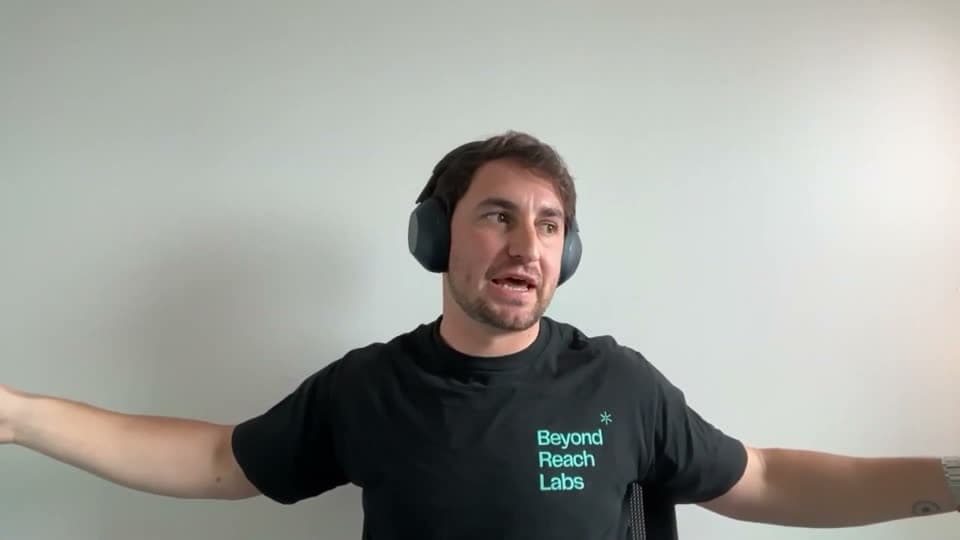
Or you could build stuff here, send it there and have it like pop up, just like a pop up tent. You know, like, I guess when you go camping, you can either go like forage for wood and like build your own tent when you're there, or you can just bring your REI tent and just assemble it, you know, like pop it up. So that's the like, maybe like the highest level motivation is we wanted to get very good at doing sort of these deployable structures. And I can sort of show you like one of those, one of these things that Mitch worked on during his PhD. So this is something that he actually invented and got a patent on. But it's sort of packs flat like this. And then when it extends, it's a single degree of freedom mechanism. It actually extends out of plane, which solves a big problem because you don't just need things to get big. They have to actually be, from technical standpoint, like very stiff and strong to take structural loads. Exactly.
Mm-hmm. a stable.
This solves a big problem because it expands out of plane. So you get that bending stiffness and it packs flat. So that's part of the problem. You have to rethink how are we designing structures for the volume constraints on a rocket. No matter how powerful your rocket is, it's only got this little volume on the top and you have to pack everything you want into that, no matter how heavy it is with us.