How a software pitch to YC turned into a hardware company
From Football Field Size Solar Arrays That Fold Into a Rocket on Deeptech Decoded, with Pele Collins.
Transcript

Mm-hmm. Yeah.
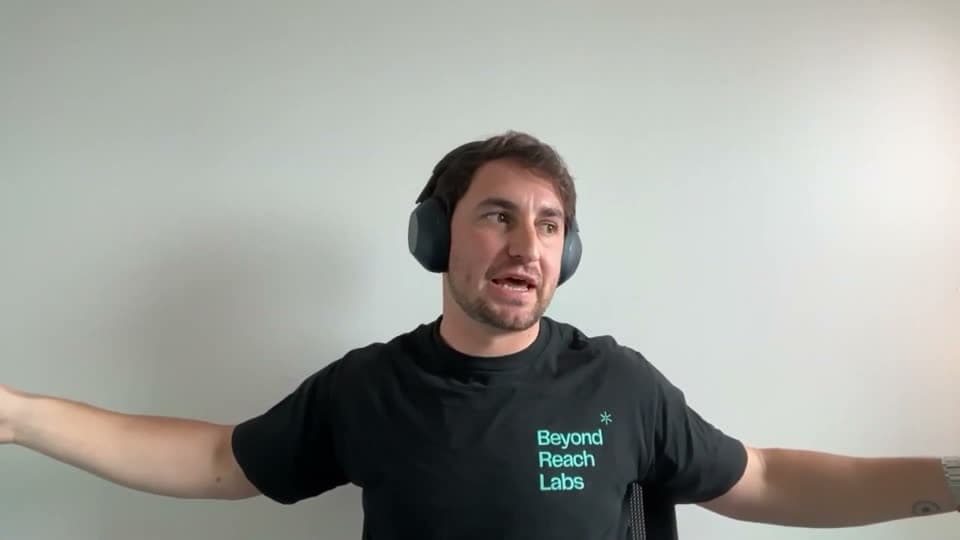
It's huge.
Yeah, I think it would, it's like a massive unlock for the whole space industry, right? It's just like, if all of a sudden, I need a beam that's this big. mean, if you go to like, everything's made out of big beams, right? Your house is made up of a bunch of beams. And like, if you could take together a bunch of those beams, what could you build in space? It kind of just unlocks like everything. Same on like the moon, same on Mars, if we're going to be interplanetary.
In your case, you set your own bar. It's not like in a typical software development. You talk to your power users, you talk to your early adapters, and then you try to... You are very well-schooled at SpaceX with respect to that. But what was the eye-opening moment for you? Either it came from a customer in a way, or it made you think differently all of a sudden. What was your biggest aha moment? since you guys launched.
Yeah, I mean, I think. Yeah, I mean, honestly, when we first applied to iCombinator, we actually applied with a pretty different idea, which is, think, pretty classic of everyone. We were more focused on the software, the simulation side of things, because it is a big problem. There's no good way to analyze these deployable mechanisms and gain confidence. So we were focused on just that part of it. And we went out to customers, started talking to them, and we said, hey, we have this cool software tool that you can use to analyze your deployable mechanisms. And I remember it was like one, and then two, and then three of our customers were just like, they said to us, said, well, this tool looks great, but can you just design and build the thing for us? Because.
We have nothing to analyze.
It was like, this is such a big problem and we don't want to just learn this new tool. you just, this is like, and it's been like our engineering teams are constrained. They work in other problems. We have no one to work on this right now. And for us, it was great because Fundamentally Mitch and I are both hardware people. We're the mechanical engineers. We actually like the hardware side of things and that's what I did my whole career. So that was a moment of like, oh yeah, we should just like own the whole, not just like one piece, but we should own the entire part of it. So it's like, we're now doing the design. We're keeping our tools internally for ourselves for analysis. And we're actually building and delivering the best products to the customers that we're confident are gonna work.